
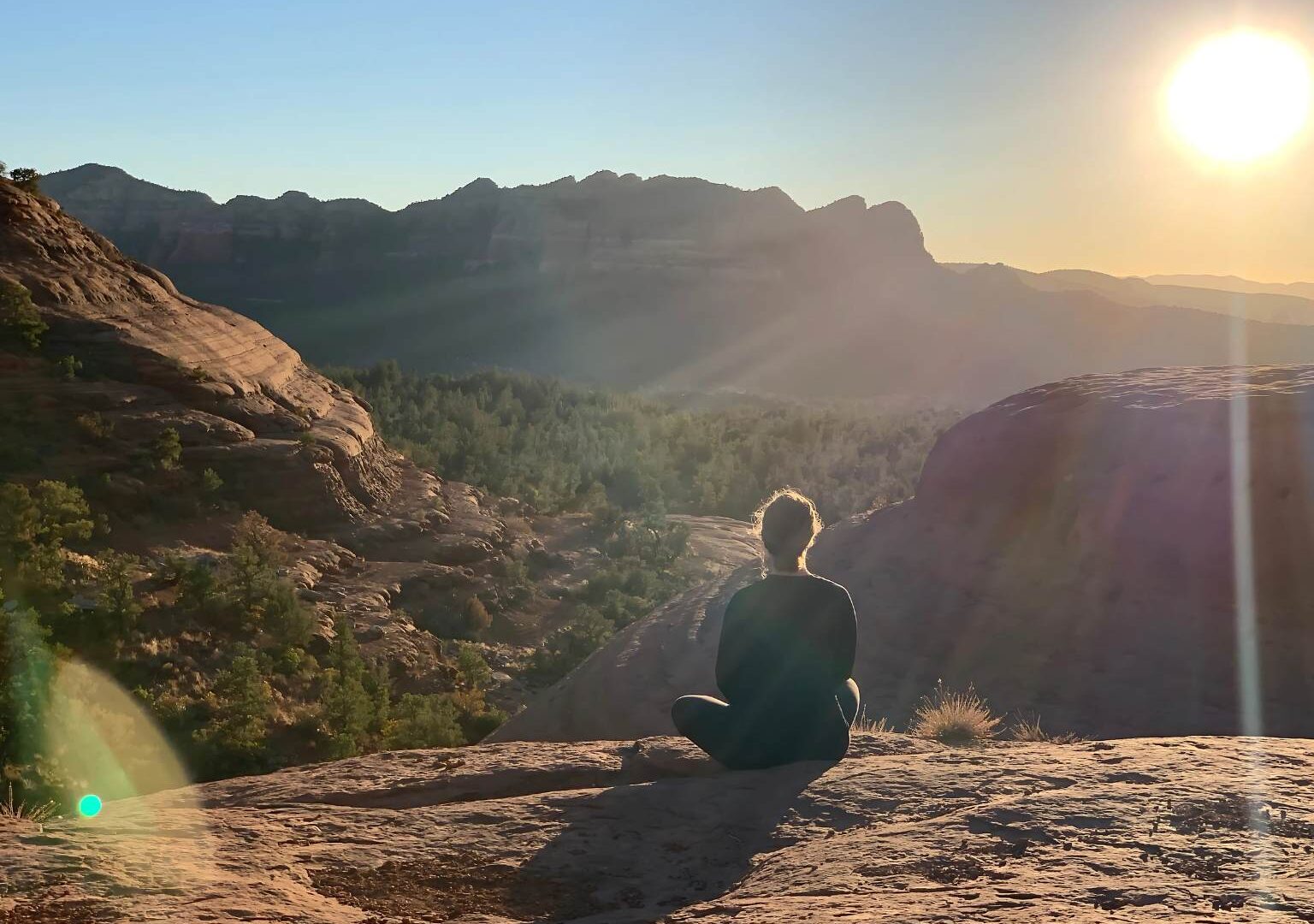
Dharana vs Dhyana: The Difference Between Concentration and Meditation
13 years · 40+ retreats · 700+ women



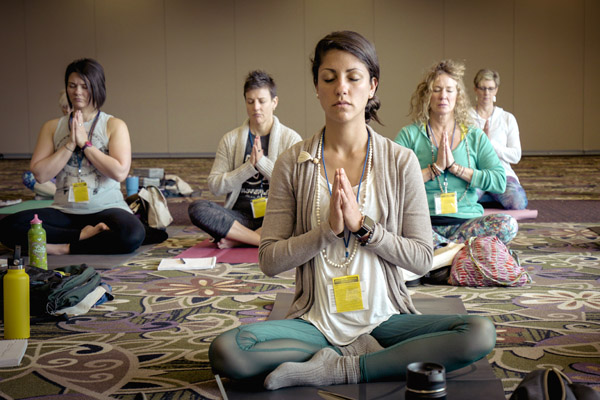
If you’ve ever sat down to “meditate,” lasted about forty seconds before your brain wandered to the to-do list or grocery list, and then decided you’re just bad at this, this post is for you.
You’re not bad at it. You were doing dharana. Nobody told you that’s a different thing from dhyana. Understanding dharana vs dhyana, the sixth and seventh limbs of yoga, is the single most useful thing I teach in the meditation sessions at our women’s retreats, and it’s the thing that takes “I can’t meditate” off the table for good.
In this post:
- What are dharana and dhyana in the eight limbs of yoga?
- What is dharana?
- What is dhyana?
- What’s the real difference between dharana and dhyana?
- Can you skip dharana and go straight to dhyana?
- What does this look like in real life?
- How do you practice dharana this week?
- FAQ
What are dharana and dhyana in the eight limbs of yoga?
Dharana is the sixth limb of yoga and dhyana is the seventh, according to Patanjali’s Yoga Sutras. Dharana means concentration. Dhyana means meditation. They sit next to each other on the eight-limbed path because dhyana is what dharana turns into when it deepens.
The full path is: yama, niyama, asana, pranayama, pratyahara, dharana, dhyana, and samadhi. Most of us in the West spend our whole yoga life in limb three (asana) with a little limb four (pranayama) sprinkled in. Limbs six and seven are where meditation actually lives.
Patanjali gives them each one line:
- Dharana (Sutra III.1): binding the mind to one place. Deśa-bandhaś cittasya dhāraṇā.
- Dhyana (Sutra III.2): the continuous, unbroken flow of attention toward that same place. Tatra pratyaya-ekatānatā dhyānam.
One is the act of choosing where your attention goes. The other is what happens when it stays there on its own.
What is dharana?
Dharana is concentration: choosing a single object and bringing your attention back to it every time it wanders. It’s the practice most of us are actually doing when we sit down to “meditate.” Your breath. A candle flame. A mantra. The sound of the creek. The feeling of your feet on the ground.
Then your mind wanders. That’s not a failure of dharana. That is dharana. The whole practice is the noticing and the coming back. Wander, notice, return. Two hundred times in ten minutes if that’s what it takes.
A few things that are true about dharana:
- It takes effort. You are actively doing something.
- It’s a skill. It gets stronger with reps, the same way a muscle does.
- It’s the part of meditation you can practice on purpose. You can sit down and decide to do dharana.
- Almost every meditation app, guided track, and beginner class is teaching dharana, even if they call it meditation.
This isn’t just tradition talking. Researchers at Emory scanned meditators’ brains during breath-focused practice and mapped the exact cycle: the mind wanders, you notice, you shift back, you sustain. Each phase lights up a different brain network, and the “noticing” moment has its own signature. Every return you make is a real rep for a real circuit.
There’s an old image from the commentaries on the sutras I love. Dharana is water dripping from a tap. Drop, gap, drop, gap. Your attention lands on the object, breaks, lands again. The drops are real. They just aren’t continuous yet.
What is dhyana?
Dhyana is meditation: attention that stays on the object without you holding it there. It’s what dharana becomes when the gaps close.
Same object. Same attention. But now there’s no more returning, because you never left. The commentaries describe it as pouring oil from one vessel to another: one steady, unbroken stream. Nothing drips. Nothing needs to be restarted.
This is the part that surprises people: you can’t decide to do dhyana. You can only set up the conditions for it (that’s dharana) and let it arrive. The moment you think “oh, I’m meditating now,” you’ve stepped back out into concentration. Dhyana doesn’t have a narrator.
If dharana is you gripping the rope, dhyana is when you realize you’re not gripping anymore and you’re still holding on.
What’s the real difference between dharana and dhyana?
The difference between dharana and dhyana comes down to effort and continuity. Dharana takes effort and gets interrupted. Dhyana is effortless and unbroken. Same object, same seat, same breath. The only thing that changes is whether you’re still working.
| Dharana (limb 6) | Dhyana (limb 7) | |
|---|---|---|
| What it is | Concentration | Meditation |
| What you’re doing | Choosing a focus and coming back to it | Nothing. Attention stays on its own |
| Effort | Yes, and it should feel like effort | Effortless |
| Attention | Interrupted, then repaired | Continuous, unbroken |
| Can you practice it directly? | Yes | No. It’s the result of practicing dharana |
| The image | Water dripping, drop by drop | Oil pouring in one steady stream |
Can you skip dharana and go straight to dhyana?
No. You can’t skip dharana to get to dhyana, because dhyana isn’t a separate technique. It’s the deepening of concentration. There is no other road.
I see this constantly with women who come on retreat wanting to “learn to meditate.” What they usually mean is they want the quiet, spacious, nothing-pulling-on-me feeling. That’s dhyana. And they’re frustrated because every time they sit, all they get is the wandering and the returning.
Patanjali is clear that the limbs build. Pratyahara (limb five, drawing your senses inward) makes dharana possible. Dharana makes dhyana possible. Dhyana makes samadhi possible. He groups these last three together and calls them samyama (Sutra III.4), and describes them as the inner limbs compared to everything that came before (III.7). One process, three depths.
So if you’re sitting there doing drop-drop-drop and it never turns into a stream, you haven’t done anything wrong. You’re doing limb six. Limb seven comes when it comes.
“I run my own business, so my brain never really stops… Now I’m just chill, and I don’t chill. I wanted to learn how to relax, and now I’m comfortable just journaling, which I’ll continue for the rest of my life.”
— Dawn, Sedona 2026
If you want to practice this with someone in the room: our next Sedona retreat is April 29-May 3. Morning movement, red-rock hikes, and a meditation session most days where this exact drop-to-stream thing gets to happen. See the Sedona retreat →
What does dharana vs dhyana look like in real life?
You already know dhyana. You’ve been in it. You just didn’t have a name for it.
The last mile of a hike when your legs are moving and your mind has gone quiet and you didn’t decide to stop thinking, it just stopped. Kneading bread. Weeding. Watching a fire. Swimming laps. The moment your kid was little and you watched them sleep and time did that thing.
Those weren’t accidents. Your attention landed on one thing and stayed there without a fight. And notice how it felt. Not blank. Alive. Awake in a way you don’t get from scrolling. That feeling is the point of all of this. Not a quiet mind for its own sake, but a mind quiet enough to actually be here for your own life.
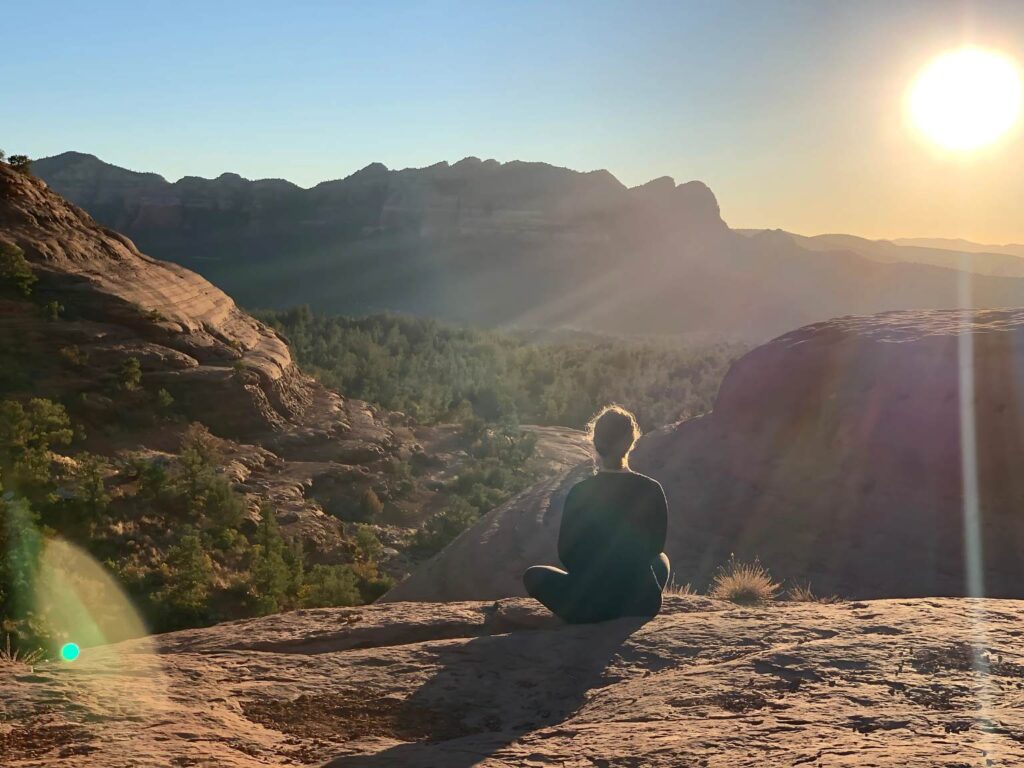
Nature is full of objects that are easy to hold, which is a big part of why we do so much of our practice outside. Here in Bend, that’s a river. On our Oregon retreats, it’s a creek. In Sedona, it’s red rock and warm sun. In Patagonia, it’s the Puelo River. It’s a lot easier to stay with the sound of moving water than with the hum of a refrigerator.
On retreat, that’s the whole setup. We take away the phone, the schedule, the being-needed. We get you moving in the morning so your body isn’t buzzing. Then we sit. And the drips have a much better chance of turning into a stream.
How do you practice dharana this week?
You practice dharana with five minutes, one object, and no grading. You don’t need a retreat for this.
- Pick something simple and physical. The breath at your nostrils. The weight of your hands. A single word.
- Set a timer for five minutes. Not twenty. Five.
- Put your attention on the object. When it leaves (it will), notice, and come back. No commentary about how you left.
- Count returns if it helps. Every return is a rep.
- Stop when the timer goes. Don’t grade it. Don’t judge it.
Do that most days. Some day, mid-sit, you’ll realize a while has gone by and you never had to come back. You won’t be able to say exactly when it started.
That’s dhyana. You didn’t do it. You just stopped getting in the way. And what’s on the other side isn’t emptiness. It’s you, with room to breathe again.
Want a place to practice with a group? Three options:
- Sedona, April dates 29 – May 3. Small group, morning movement, red-rock hikes, all levels. Sedona retreat details and booking →
- UnBound, Patagonia, April 10-17. Northern Patagonia’s Puelo Valley in its best month: rivers, hot springs, and a lot of quiet. For the woman who wants the hike and the harder pose. Patagonia retreat details and booking →
- Go deeper. If the eight limbs light you up and you want to understand them the way a teacher does, our 200-hour training, Inner Alchemy, runs October 2026 through May 2027. Next cohort starts in January 2027. Learn about Inner Alchemy →
Not ready for any of those? Join our Mindful Monday Newsletter, and receive an accessible practice you can use on your porch delivered to your inbox a couple of Mondays a month.
Dharana vs dhyana: FAQ
Autumn shares pre-recorded guided meditations and yoga nidra practices on Insight Timer and YouTube. These practices are designed to meet you exactly where you are.
Yes. Every Ambuja retreat includes guided meditation sessions, usually after morning movement and often outdoors. They’re built for beginners and experienced practitioners alike, and most are dharana-based so you leave with something you can actually keep doing at home.
No. Dharana requires no flexibility, no poses, and no experience. If you can notice that your mind wandered and bring it back, you’re doing it.
Dharana is concentration: choosing one object and returning to it each time your mind wanders. Dhyana is meditation: attention that stays on the object continuously, without effort. Dharana is the sixth limb of yoga; dhyana is the seventh.
Close, but not quite. Mindfulness usually means open, non-judgmental awareness of whatever arises. Dharana is narrower: one chosen object, and returning to it. Mindfulness is wide-angle. Dharana is a spotlight.
Dharana comes first. Dhyana is what dharana becomes when concentration is no longer interrupted.
No. You practice dharana. Dhyana is the result, and it arrives on its own once concentration becomes continuous.
There’s no set timeline. For some people it’s seconds within a practice; for others it takes months of consistent sitting. Patanjali’s guidance in Sutra I.14 applies: practice becomes firmly grounded when it’s done for a long time, without a break, and with sincerity.
Samadhi, the eighth limb. In samadhi, even the sense of being someone who is meditating drops away and only the object remains (Sutra III.3). Dharana, dhyana, and samadhi together are called samyama.
About the Author
Autumn Adams
E-RYT, YACEP, Founder of Ambuja Yoga
Autumn Adams (E-RYT 500, YACEP) is the founder of Ambuja Yoga, where she's led women's yoga retreats since 2014 — 40+ retreats and 700+ women across Oregon, North Carolina, Sedona, Patagonia, Greece, Mallorca, and Thailand. Her work has been featured in Insider, Shape, Zappos, Asia Spa, Direct Holiday, and Bend Nest, and she's the author of The Little Book of Mudra Meditations.
You Might Also Enjoy
If You’re Teaching Yoga Nidra, Stop Doing This
There’s one note I give yoga teachers more than any other when it comes to…
If You’re Teaching Yoga Nidra, Stop Policing Sleep
Full disclosure, I trained in a Bihar-inspired lineage, so I do ask my students to…
Yoga Nidra for Manifestation: How Deep Rest Helps You Reconnect With What You Actually Want
Here’s a question that stops a lot of women cold: what do you actually want?…