
13 years · 40+ retreats · 700+ women



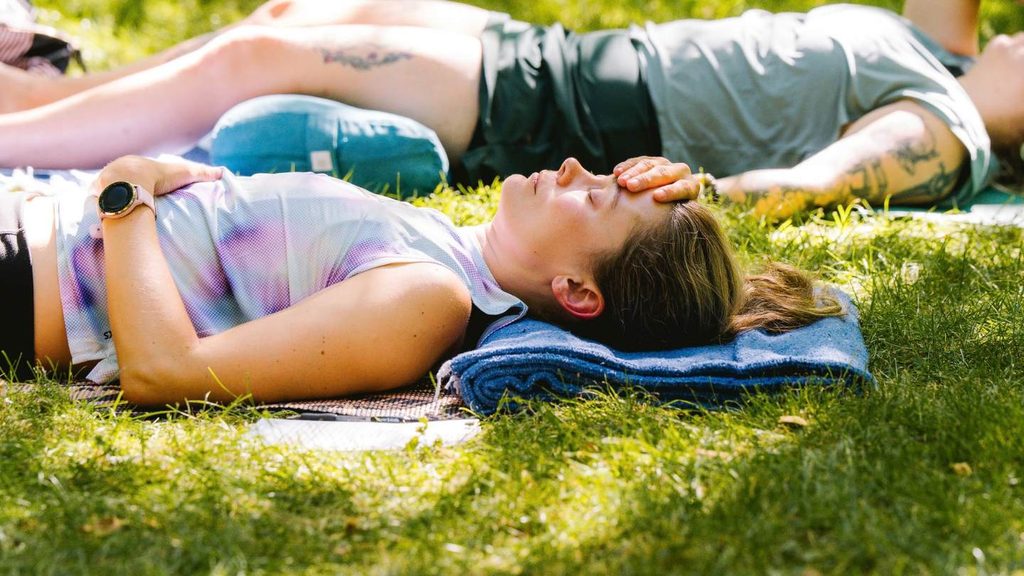
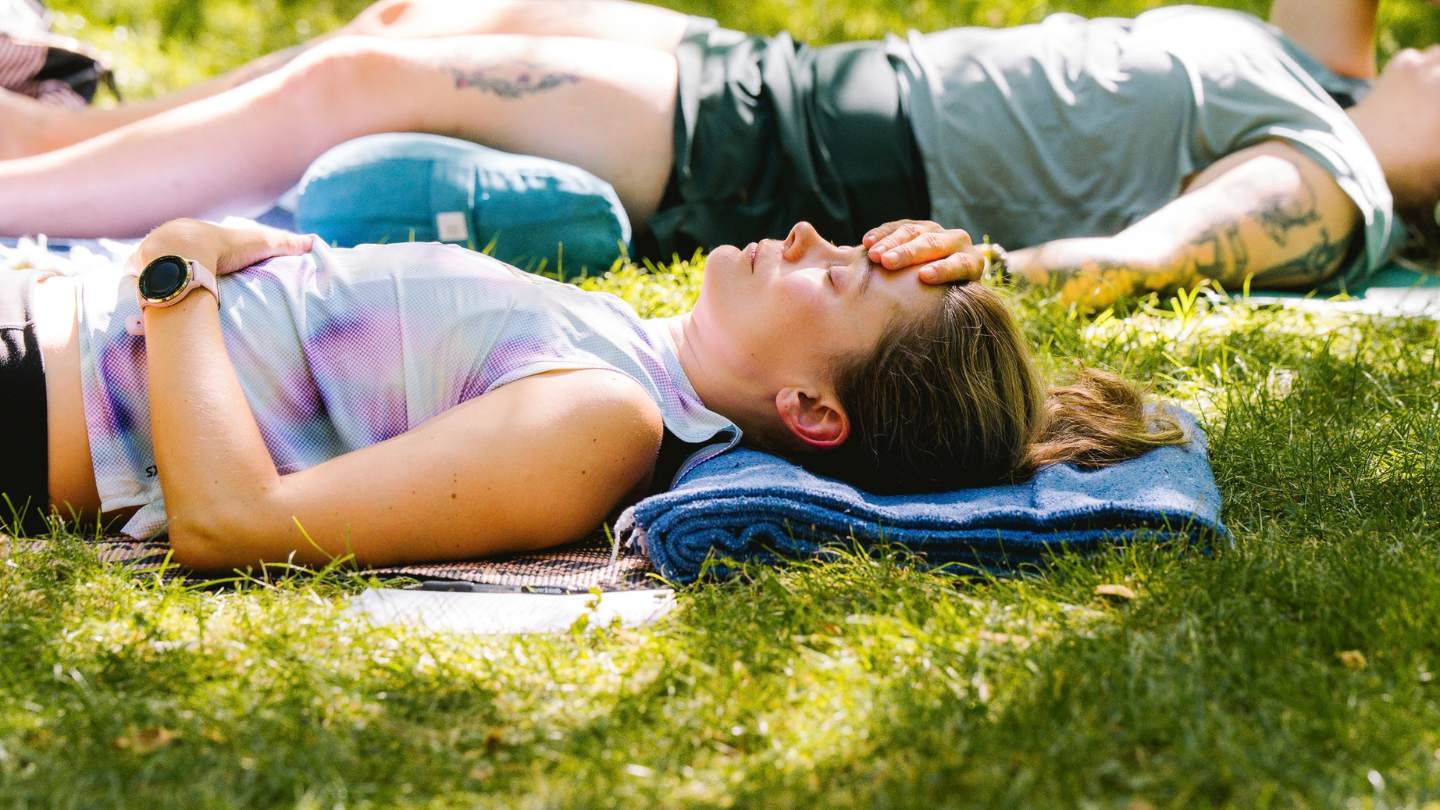
You’re lying on your mat, blanket tucked under your chin, listening to the voice guide you through your body. Right hand. Right thumb. Second finger. And then something strange happens. Your hands start to vibrate. Your legs feel like they’re buzzing. Maybe your whole body feels like it’s softly vibrating, like a phone on silent.
If your body vibrates during yoga nidra, you’re not doing it wrong, and you’re not the only one. I’ve been teaching for over 13 years, and this question pops up every once in a while after a nidra practice, usually asked a little quietly, like it might be weird.
The first time it happened to me, I was in Bali during my 300-hour teacher training. My honest first thought was that I was about to have an abrupt kundalini awakening. (I wasn’t.) What was happening was much more ordinary than that, and honestly, much more useful to understand.
It isn’t weird. It’s a sign your body is doing exactly what yoga nidra invites it to do: let go.
Here’s what’s actually going on, in plain language, with a little science and a little yoga philosophy.
Is It Normal to Feel Vibrations During Yoga Nidra?
Yes. Vibrating, buzzing, tingling, or gentle trembling during yoga nidra is very common and, on its own, harmless. People describe it in all kinds of ways: electricity, humming, waves, pins and needles, a warm buzz in the hands and feet.
There isn’t one single cause. It’s usually a few things happening at once, which is why I like to look at it from three angles: what happens right at the edge of sleep, what happens in your nervous system, and what happens when you pay close attention to your body.
Why Yoga Nidra Puts You at the Edge of Sleep
Yoga nidra holds you in the space between waking and sleeping, and that space is where vibrations most often show up. Sleep researchers call it the hypnagogic state. It’s the in-between zone you pass through every night on your way to sleep, usually too quickly to notice.
In that zone, your brain starts loosening its grip on the outside world. The filters that normally sort and mute sensation get a little fuzzy. That’s why people drifting off sometimes see colors, hear sounds that aren’t there, or feel a buzzing or humming through the body.
The difference in yoga nidra is that you stay there on purpose. The guided voice keeps a thread of awareness alive while your body goes to sleep around it. It’s also why the silences in a well-taught nidra matter so much. (Teachers, I wrote about how to teach yoga nidra with the pauses it needs.) So instead of rushing past those sensations, you get to notice them.
The little twitches or jolts some people feel belong to this same family. They’re called hypnic jerks, and they’re the same thing that makes you startle awake right as you’re falling asleep at night. Sleep researchers estimate that up to 70% of people experience them. Totally normal, if a bit dramatic.
What Your Nervous System Is Doing
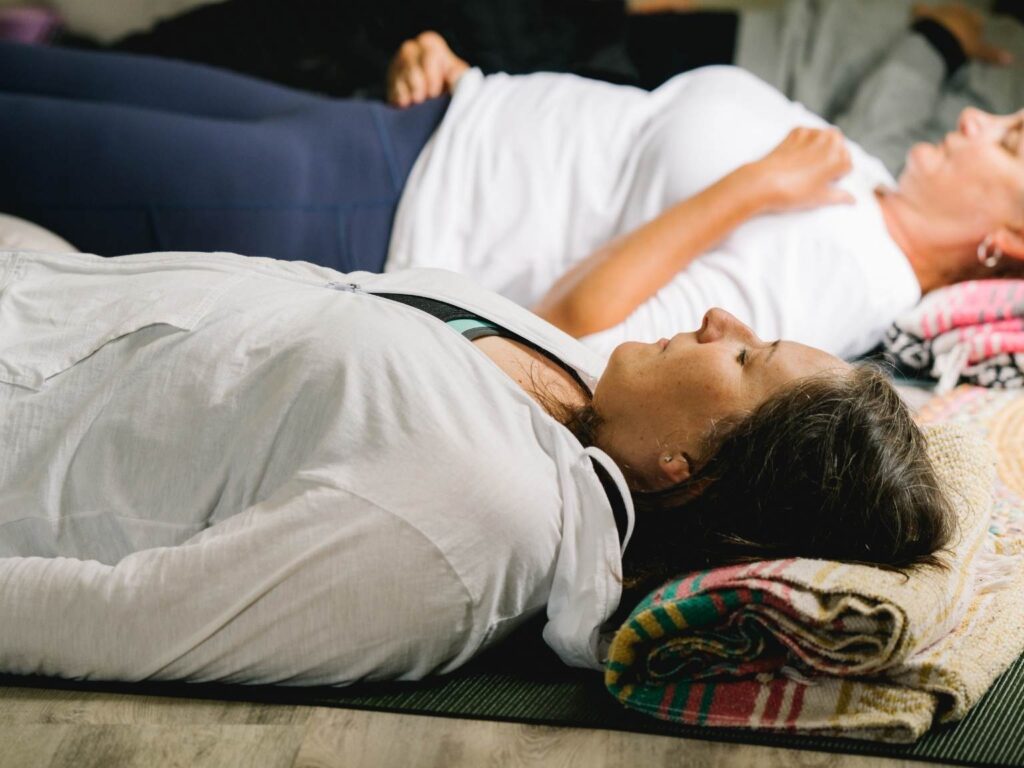
Vibration during yoga nidra is often your nervous system shifting out of “on” mode and letting go of tension it’s been holding. Most of us spend our days in a low hum of sympathetic activation: alert, braced, ready for the next email or the next person who needs something. Yoga nidra gives the parasympathetic side, the rest-and-digest side, a chance to take the lead. That nervous system shift is the driving force behind many of the benefits of yoga nidra, from better sleep to lower stress.
When that shift happens, muscles that have been quietly gripping for hours (or years) start to release. Release isn’t always perfectly smooth. It can show up as trembling, small twitches, or a fine vibration as those muscles let go.
There’s a whole body of somatic work built around this idea. Practices like TRE (tension and trauma releasing exercises) intentionally invite a gentle tremor, based on the idea that shaking is one of the ways the body discharges stress. The research is still early, but the idea will feel familiar if you’ve ever watched a dog or deer shake itself off after a scare. Somewhere along the way, us adults learned to hold still.
So if your legs start to quiver during practice, it may simply be your body finishing a cycle it never got to finish. You don’t have to make it happen or make it stop.
This is what retreat is for. A few days where your nervous system finally gets to turn down. Morning practice, shared meals, time outside, and yoga nidra with nothing to rush back to afterward. Our next retreat is Rooted & Wild in Sedona April 29 – May 3
Why You Feel Tingling in Your Hands and Feet
Tingling during yoga nidra often comes from attention itself: when you focus on a body part, you feel it more. Your body is always full of sensation. Your pulse, blood moving through tiny vessels, the air on your skin, small muscle flickers. Your brain filters most of it out so you can get through the day.
The body scan in yoga nidra (called rotation of consciousness) does the opposite. It asks you to place your attention on one tiny part of the body at a time. Right thumb. Left knee. The space between the eyebrows. Focused attention turns the volume up on whatever it lands on.
The skill of feeling what’s happening inside your body is called interoception. Most of us have let it get rusty. We know how to override hunger, ignore fatigue, and push through tight shoulders. Feeling your hands buzz after they’re named is your interoception waking back up.
That matters beyond the mat. The same skill that lets you notice a humming hand is the one that lets you notice you’re tired before you’re depleted, or that something lights you up before your head talks you out of it.
What Yoga Philosophy Says About Vibrations
In the yoga tradition, vibration is often understood as prana, or life energy, moving more freely once the body and mind get quiet. Yoga describes us as having layers, called the koshas. The outermost is the physical body. Just inside it is pranamaya kosha, the energy body. My nature-inspired yoga nidra script moves through each one.
Most of the time, the noise of the physical body and the busy mind drowns out anything subtler. When yoga nidra settles both, the energy layer becomes easier to feel. Teachers in this tradition would say you’re not imagining the buzz. You’re perceiving something that’s always been there.
Is It a Kundalini Awakening?
Almost always, no. Some lineages do connect strong energetic surges to kundalini, and if you’ve read about it, it’s natural to wonder. I wondered too, lying on my mat in Bali. But gentle buzzing during yoga nidra is far more often the ordinary things described above: a relaxed body resting at the edge of sleep. Nothing dramatic is required of you, and nothing is going to happen to you that you can’t come back from by opening your eyes.
I don’t think you have to choose between the science and the philosophy. They’re two vocabularies for the same experience. One talks about the parasympathetic nervous system. The other talks about prana. Either way, the invitation is the same: notice it, stay curious, and let it be.
What to Do When Your Body Vibrates During Yoga Nidra
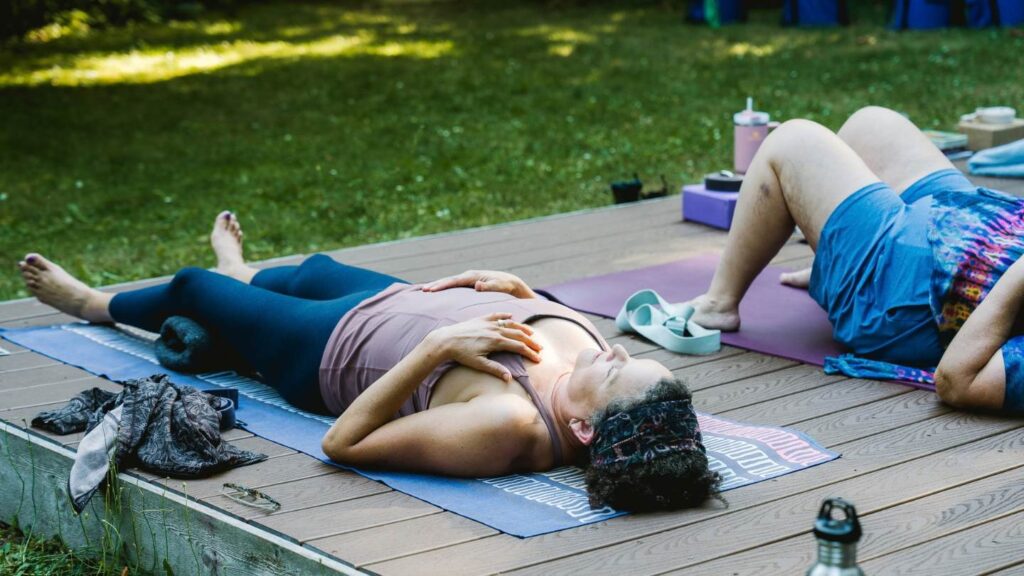
Most of the time, the best thing to do is nothing. Let the sensation be there and keep following the voice. You don’t need to analyze it, chase it, or try to make it stronger. If it fades, that’s fine too. It doesn’t mean the practice worked better or worse.
If it starts to feel like too much, you’re always allowed to come back. Try this:
- Open your eyes and let them rest on something in the room.
- Wiggle your fingers and toes.
- Feel the weight of your body on the floor, and the floor holding you.
- Take a few slow breaths with a longer exhale.
- Change positions.
- Return to the practice only if it feels okay. Sitting up and resting is still rest.
When to Adjust Your Practice
Vibration on its own is nothing to worry about. A few things are worth paying attention to:
- Numbness or tingling that lingers after you get up. This is often about position, like a nerve getting compressed. Try a bolster under your knees, a blanket under your head, or arms a little farther from your sides.
- Feeling panicky, flooded, or pulled into painful memories. Deep relaxation can sometimes bring things to the surface. Keep your eyes open, practice for shorter stretches, and consider working with a trauma-informed teacher or therapist.
- Strong, rhythmic jerking you can’t stop. That’s different from gentle trembling. Check in with your doctor.
You’re the expert on your own body. Nothing in yoga nidra is something you have to push through.
The Point Isn’t the Buzz
The vibrations are interesting, but they’re not the goal. The goal is the thing underneath them: a body that finally feels safe enough to soften.
So many of the women I work with have been braced for years… this has been my journey too. Holding it together for kids, for work, for everyone. When the body starts to hum in yoga nidra, it’s often the first time in a long time it’s been allowed to stop holding.
And that’s where it gets good. It’s what makes room for everything else. The laughter that sneaks up on you. The energy to do the thing you’ve been putting off. The feeling of being fully back in your own life.
You don’t have to earn that. You’re worthy of it now. You’re allowed to have a life that you love. You are worthy of love, and time, and rest, and laughter.
If you’d like to experience yoga nidra in person, it’s part of every Ambuja retreat. Our next one is Rooted & Wild in Sedona, April 29 – May 3 and it’s an easy place to start, even if you’re coming on your own. Most women do. Save your spot →
Not ready for a retreat yet? Download my free nature-inspired yoga nidra script and audio (without the pesky YouTube ads) and notice what comes up.
Frequently Asked Questions
Your body may vibrate during yoga nidra because you’re resting right at the edge of sleep, your nervous system is shifting into rest mode and releasing tension, and the body scan heightens your awareness of sensations that are normally filtered out.
Yes. Gentle vibration, buzzing, or tingling during yoga nidra is somewhat common and harmless on its own. If it comes with lasting numbness, panic, or strong jerking you can’t control, adjust your practice and talk to a professional.
Tingling in the hands and feet usually comes from focused attention during the body scan. When you place your awareness on a body part, you notice sensations like pulse and blood flow that are always there but usually go unnoticed.
Small twitches or sudden jolts are usually hypnic jerks, the same involuntary movements that can happen as you fall asleep at night. They’re a normal part of the transition between waking and sleep. Surprising, but totally normal.
It can be. As the nervous system shifts out of a stressed state, muscles that have been holding tension may tremble as they let go. Somatic practices like TRE work with this natural tremoring on purpose.
In yoga philosophy, vibrations are often understood as prana, or life energy, becoming perceptible as the physical body and mind quiet down. This relates to the pranamaya kosha, known as the energy layer of the body.
Open your eyes, wiggle your fingers and toes, feel your body’s weight on the floor, and take a few slow breaths. You can return to the practice when it feels okay, or simply rest with your eyes open. I’ve found it helpful to turn the palms of my hands down and feel my mat and the floor beneath me.
Not necessarily. Vibrations are one common experience, but not a sign of a better practice. Many people feel nothing unusual and still get the full benefit of deep rest.
Usually not. While some yoga lineages associate strong energetic sensations with kundalini, gentle vibration during yoga nidra is most often a normal response to deep relaxation, the hypnagogic state, and heightened body awareness.
Sources
- Sleep Foundation, Hypnic Jerks: What Causes Them and How to Stop Them
- Ghibellini, R. & Meier, B. (2022). The hypnagogic state: A brief update. Journal of Sleep Research, 32(1).
- Khalsa, S. S. et al. (2018). Interoception and Mental Health: A Roadmap. Biological Psychiatry: Cognitive Neuroscience and Neuroimaging, 3(6).
- Journal of the American Board of Family Medicine (2018). Tension and trauma release exercises for restless legs syndrome: a randomized trial.
About the Author
Autumn Adams
E-RYT, YACEP, Founder of Ambuja Yoga
Autumn Adams (E-RYT 500, YACEP) is the founder of Ambuja Yoga, where she's led women's yoga retreats since 2014 — 40+ retreats and 700+ women across Oregon, North Carolina, Sedona, Patagonia, Greece, Mallorca, and Thailand. Her work has been featured in Insider, Shape, Zappos, Asia Spa, Direct Holiday, and Bend Nest, and she's the author of The Little Book of Mudra Meditations.
You Might Also Enjoy
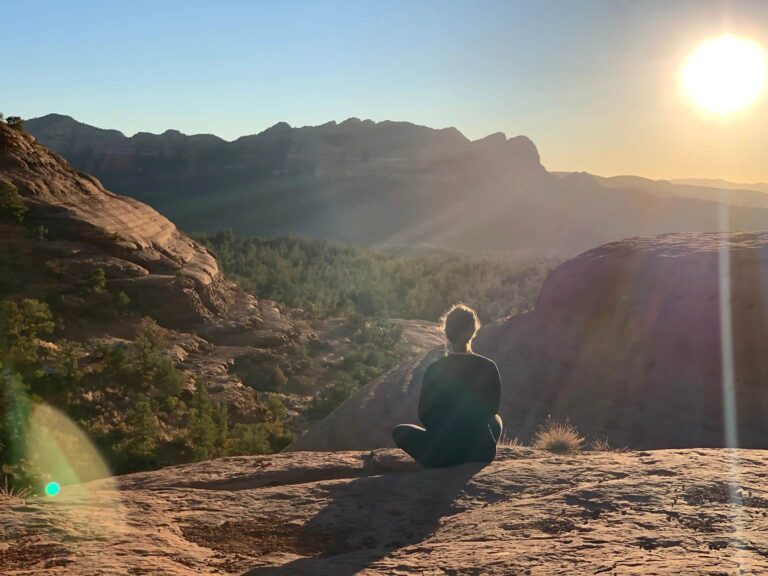
Dharana vs Dhyana: The Difference Between Concentration and Meditation
If you’ve ever sat down to “meditate,” lasted about forty seconds before your brain wandered…
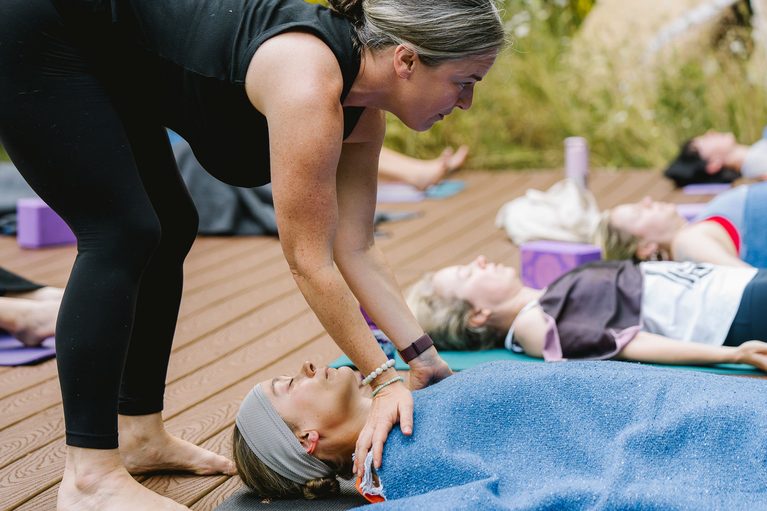
If You’re Teaching Yoga Nidra, Stop Doing This
There’s one note I give yoga teachers more than any other when it comes to…
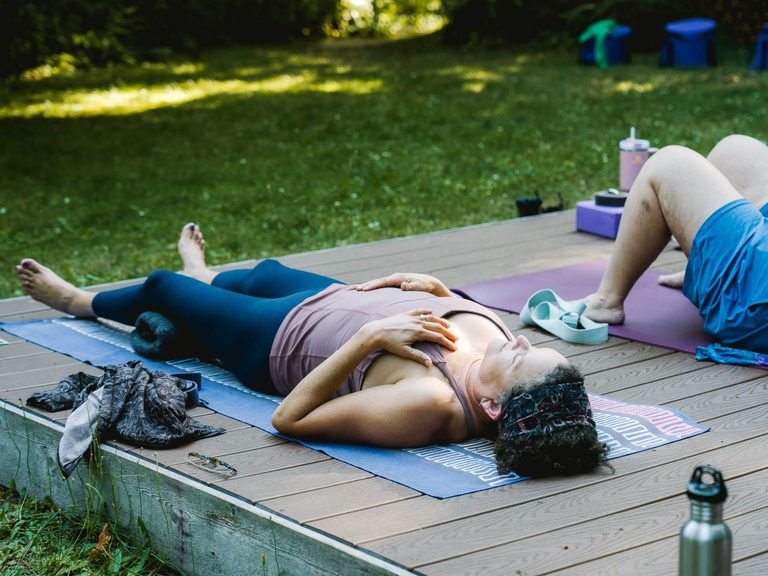
If You’re Teaching Yoga Nidra, Stop Policing Sleep
Full disclosure, I trained in a Bihar-inspired lineage, so I do ask my students to…