

How to Afford a Yoga Retreat Without Breaking the Bank
13 years · 40+ retreats · 700+ women



If you’ve been dreaming of a yoga retreat but keep telling yourself it’s too expensive, this one’s for you.
Here’s what I’ve learned in over a decade of leading retreats around the world and helping women get themselves to them: investing in yourself is essential, and cost doesn’t have to be the barrier you think it is. The nice thing about money is that you can always make more of it — you just have to get a little creative sometimes. I’m a self-described possibilitarian, so let’s talk about what’s actually possible.
Below are the same strategies I use to plan my own travel, organized so you can skip to whatever’s most useful. Every budget’s different — take what works and leave the rest.
How do you save money booking a yoga retreat?
Book early and get on the host’s email list. That’s the single biggest lever. Most hosts offer an early-bird discount, and the ones who don’t usually load the early window with the best bonuses instead — a free workshop, a private coaching session, or an airport transfer thrown in.
Here’s the insider part: the email list almost always gets first crack at early-bird spots before anything goes public. (That’s exactly how I run mine — my list gets the first pass, then Instagram, then ads.) So if there’s a retreat or a destination you’ve been eyeing, get on that host’s list and follow them now. That’s where the real deals surface first — and you get first dibs on the best rooms, too.
When should you book your flights for a retreat?
Book flights about two to three months out for the best fares — it can save you hundreds. Mid-week departures (Tuesday, Wednesday, Thursday) tend to be cheapest, and sometimes Saturday. Since most retreats start on a Saturday, a nice move is to fly out Thursday, land Friday, shake off the jet lag, and start fresh.
What are the best apps for finding cheap flights?
The most useful flight tools are Google Flights, Skyscanner, Travel Pirates, and Hopper. Google Flights is the obvious workhorse. Skyscanner is underrated — great for price alerts and for turning up cheap fares you won’t find elsewhere; you can search from your city out to a destination, compare nearby airports, and browse by map.
One advanced option, with a real caveat: Skiplagged finds “hidden-city” fares, where you book a flight that connects through your actual destination and skip the final leg. It can be cheaper — but know the tradeoffs before you try it. Hidden-city ticketing violates most airlines’ terms of service, you can’t check a bag (it would fly on to the final city without you), a delay can reroute you entirely, and airlines can penalize repeat use. AND it really only works on one way tickets — the remainder of your ticket is often voided if you don’t complete the flight. It’s an eyes-open, advanced-traveler move, not a default.
Should you use credit card points to pay for a retreat?
Yes — if you’re someone who pays your balance in full every month. A lot of travel cards earn points you can put toward flights and hotels, and running your regular expenses (groceries, bills) through a rewards card can build up a real travel stash over time. The one rule: only do this if you clear the balance monthly. Carrying a balance costs far more in interest than any points are worth.
Is it cheaper to go on a retreat in the off-season?
Usually, yes. Retreats, accommodations, and flights all tend to be cheaper in the off-season or shoulder season, since flights especially climb during peak travel windows. The tradeoff is weather — but a good host designs around it. In a rainy-season destination, for example, mornings (often clear) become hikes and adventures, and afternoons (more likely to rain) become yoga and workshops. Ask the host how they handle the season before you book.
What are some creative ways to fund a yoga retreat?
Beyond an early-bird discount, there are more ways to fund a retreat than most people realize:
- Referral programs. Many facilitators offer a discount or commission when you refer a friend who books. It’s often not advertised — just ask. Most hosts love the help filling spots and have a budget set aside for exactly this.
- Content in exchange for a discount. If you’re comfortable creating reels, testimonials, photography, or blog posts, some hosts will trade a partial or full discount (or pay per piece) for content they can use to market future retreats. A social-media takeover for the week can be a fun version of this.
- Contributions for birthdays and holidays. Instead of another candle or pajamas you’ll never wear, ask for contributions toward your retreat. On WeTravel (the booking platform I use), guests can set up a simple contributions page — no coding — and collect money toward their trip. People don’t take advantage of this nearly enough.
- A small fundraiser. Offer a special class or workshop and put the proceeds toward your trip, or sell things you’re not using anymore.
How do you cut costs after you’ve booked?
- Share a room. Private rooms are lovely, but a shared, double, or dorm-style room can cut your cost dramatically — and honestly, you’re barely in your room. It’s for showering and sleeping; the rest of the time you’re in class, on excursions, or outside.
- Split the airport transfer. Most retreats don’t include transport from the airport. Use the group chat (Facebook or WhatsApp) to coordinate a rideshare and split the taxi or Uber fare.
- Trade a skill. Photographers, social-media managers, wellness or breathwork facilitators — some hosts will trade a discount for a service. (I usually prefer to pay people their worth, but many teachers are open to it, and it can get you in front of a new audience.)
- Use a payment plan. Many retreats offer installments — say, a set amount every month or quarter instead of the full cost up front. Note that some hosts offer a lower rate for paying in full, so weigh which works better for your budget.
- Start a retreat savings fund. Set aside a small amount each paycheck earmarked for the trip — $20 here, $50 there genuinely adds up. Automate a transfer to a dedicated savings account, or use a round-up savings app (like Qapital, or Oportun, formerly Digit) that rounds up your purchases into savings.
What extras should you budget for?
Budget for the extras in advance so you’re not stressed about money once you’re there. Depending on the retreat, factor in: airport transfers (if not included), any meals you’re on your own for, optional excursions, souvenirs and shopping, and alcohol (some retreats include wine, some are alcohol-free, and drinks are often an add-on). A good host builds a lot of value in, so your extras are mostly the fun stuff — but check what’s included so nothing catches you off guard, and you never feel like you’re missing out.
Do you have to travel abroad for a great retreat?
No — some of the best retreats are close to home. A domestic or local retreat within driving distance saves you the flight, the layovers, the visa, and the long-haul costs entirely, and these retreats are often shorter, which brings the price down further. You can still have a deeply restorative, transformational experience packed into a few days. If you’re in a tighter season — little kids at home, less “fun money” than you used to have — a drive-to retreat can be the whole answer.
Quick recap
- Plan and book smart — early-bird deals, get on the email list, book flights 2–3 months out, use points if you pay in full.
- Go off-season — cheaper flights, stays, and rates.
- Get creative with funding — referrals, content trades, birthday contributions, small fundraisers, selling what you don’t use.
- Cut costs after booking — share a room, split transfers, consider a skill trade, use a payment plan, save monthly.
- Budget the extras in advance so you can actually relax.
You deserve to go on retreat. Prioritizing yourself doesn’t have to mean overspending — it’s more within reach than it looks.
Want a head start? Grab my free Retreat Budgeting Guide & Savings Checklist — everything here in one place, so you can map out your plan and start saving. Download it here.
About the author
Autumn Adams (E-RYT 500, YACEP) is the founder of Ambuja Yoga and host of The Aligned Yogi Podcast. She’s led women’s yoga retreats since 2014 — 40+ retreats and 700+ women across Oregon, Sedona, Patagonia, and beyond — and has spent that decade helping women get themselves to the retreat they’ve been dreaming about. She’s the author of The Little Book of Mudra Meditations and is mom to Atlas. Learn more about Autumn →
Frequently Asked Questions
How can you afford a yoga retreat on a budget? Book early to catch discounts and bonuses, get on the host’s email list for first access, book flights two to three months out, travel in the off-season, and use creative funding like referral programs, content trades, or birthday contributions. Sharing a room and using a payment plan can lower the cost further.
When is the cheapest time to book flights for a retreat? About two to three months before travel tends to give the best fares, and mid-week departures (Tuesday through Thursday) are usually cheaper. Flying out a day or two early also lets you settle in and shake off jet lag before the retreat begins.
What are the best apps for finding cheap flights? Google Flights, Skyscanner, and Hopper are the most useful. Skyscanner is especially good for price alerts and comparing nearby airports. Advanced travelers sometimes use Skiplagged for hidden-city fares, but that violates most airlines’ terms and carries real risks.
Can you use credit card points to pay for a yoga retreat? Yes, if you pay your balance in full every month. Travel rewards cards let you earn points on regular spending that you can put toward flights and accommodations. Just avoid carrying a balance, since interest charges quickly outweigh the value of any points.
Are yoga retreats cheaper in the off-season? Often, yes. Retreats, accommodations, and flights tend to cost less in the off-season or shoulder season. The tradeoff is weather, but a well-designed retreat schedules around it — for example, adventures in the clearer mornings and yoga in the rainier afternoons.
Do most yoga retreats offer payment plans? Many do, letting you pay in installments instead of all at once. Some hosts offer a slightly lower rate for paying in full, so it’s worth comparing your options and choosing whichever makes budgeting easier for you.
How can you get a discount on a yoga retreat? Book during the early-bird window, ask the host about a referral program, or offer to create content (reels, photography, testimonials) they can use for marketing in exchange for a discount. Many facilitators are open to these arrangements — it never hurts to ask.
Do you have to travel internationally for a good yoga retreat? No. Domestic and local retreats within driving distance can be just as restorative and are usually cheaper and shorter, since you skip flights, layovers, and long-haul costs. They’re a great option in a busier or tighter season of life.
[00:00:00] Hello, yogis and friends. This is Autumn, your host of the Aligned Yogi podcast. It’s been a while since I have had an opportunity to record. We’ve been dealing with some family stuff, which I might share in a future episode. But today we are diving into how to make that dream yoga retreat a reality without breaking the bank. So this episode is all about helping you find ways to get creative, to maybe save money on that yoga retreat, or make the whole overall experience a bit more affordable without you having to give up too much of your money, your precious time.
I’ll be sharing the same travel hacks that I use when I am planning out my own travel, my own retreat experiences.
So if you have been dreaming of attending a retreat, but you felt like it’s just too expensive. You can’t quite make it work Today’s [00:01:00] episode is all about you prioritizing your self care without stressing about finances. What I have found is that investing in yourself is absolutely essential and cost shouldn’t be a barrier.
The great thing about money is you can always make more of it, you just have to sometimes get a little creative. In a brief nutshell, we’re going to talk about the benefits of booking early, how to maybe get some referral discounts or bonuses, room options, off season deals, and creative ways to fund your retreat in addition to a few of those travel hacks that I mentioned before.
So as many of you know, I am a yoga retreat facilitator. I host retreats all around the world and I’ve been doing this for about 10 years. So I have tons of experience working with students to get creative, to make their retreat a reality. [00:02:00] And I have tons of experience traveling the world making the retreats or the travel experiences I want a reality.
I want to help you do the same for yourself.
The first part of this episode is all about planning and booking smartly. And that starts with booking early. If you can book early, most hosts offer some type of early bird discount. If they don’t offer a discount, usually that’s also when they have the best bonuses.
So for example, the women that booked the early bird spot for my Patagonia trip that’s coming up in 2026. we’re able to save up to 800 on the rate rate. That is crazy. If a host isn’t offering a discounted rate, oftentimes those bonuses could be something like [00:03:00] a free workshop or a private coaching lesson or private yoga class. Sometimes those bonuses include your airport transfer, which is awesome, right?
If you have been eyeing a retreat destination or eyeing a specific retreat, I encourage you to get on that retreat host email list and follow them on Instagram. That’s where you’re going to catch those early deals. For me personally, email list gets the first pass of early bird spots, and then, Once they’ve had their opportunity, I open it up to Instagram and from there I might also run a Google ad or a Facebook ad.
So it starts with those people that are in the nearest circle, and then I expand from there.
One of the benefits of booking early is that you also are able to track flights. One thing that I have found is that booking your flights about [00:04:00] 2 to 3 months in advance can save hundreds of dollars. There are also certain days of travel that tend to be cheaper as well.
I typically find like Tuesday, Wednesday. Thursday are cheap days to travel, and then sometimes Saturdays as well. Oftentimes most retreats start on Saturdays, so that might not be an option. But that’s something to think about too. So maybe you fly on a Thursday, you get that Friday to land, get over jet lag, and then Saturday you start the retreat.
Perfect. Right.
I actually want to share the travel apps that I use when I’m looking for tickets.
Google Flights, obviously, is a great one to use. I also use one called Skyscanner . I love Skyscanner and I feel like it’s so underrated. But Skyscanner is great for setting up price alerts and also finding really great cheap flights that you might not find [00:05:00] elsewhere.
If you are looking to travel, you can set your Skyscanner search to search from where you live and search out to the destination that you’re wanting to go. And you can include different airports, things like that. You can look on the map.
If you are somebody that is not very risk adverse and you like to save a larger amount of money I have actually used skip lag in the past to book my Tickets. Skip lag, what it does is it will pair up different tickets from different airlines. So you’re actually booking multiple tickets, but sometimes by doing that, you actually end up getting a cheaper flight deal. This is a little bit riskier, of course, so if your first flight was delayed, you’d end up forfeiting your next flight.
However, if you have good travel insurance, You’ll be fine. Obviously read your travel insurance [00:06:00] details. I get cancel for any reason travel insurance. So that’s what I use. I just find that is that makes me feel the safest. And you can even get an annual plan if you do a lot of traveling.
And then I also want you to consider. Using your travel points or your credit card rewards for flights and accommodations. You might not even know this, but a lot of credit cards offer points and discounts at certain hotels.
You can also sign up for a credit card that earns you points for flights. This can be really awesome if you are somebody that can be really consistent with paying off your balance every month. You can build up a lot of points by putting your bills, by putting your groceries, your rent, if you pay rent, all on a credit card.
And then you can build up those points and apply those to a flight and save some [00:07:00] money that way.
And the third thing I want to talk about in this plan and book smart section is consider traveling in the off season or shoulder season. I personally typically host retreats in high season or just barely in that shoulder season because I’m picky about weather and things like that. But, retreats themselves are often cheaper during those off peak months, and a good host is going to take into consideration what off season means in that destination. So if you’re, say, in, we’ll use Nicaragua or Costa Rica, for example, during the rainy season, oftentimes it’s not rain all day, typically rain in the Later afternoon. So perhaps that means that in the morning, you’re going to go out and go for a hike, [00:08:00] right?
You’re going to go on an adventure or go to the beach when the weather is beautiful and the sun is out. And then in the afternoon, maybe you’ll have a workshop and your yoga class when the weather is most likely to rain. So a good host is going to take in those types of considerations.
Another thing is, like, the summers in Bali are beautiful and magical. Travel in Bali in May is also wonderful. September, wonderful. October, it gets a little iffy. And November, you’re likely getting rain every day. I do find that in Bali, it rains most of the time during the rainy season. They get a lot of rain.
It’s not necessarily just those tropical showers, but multiple showers a day. So for example, I wouldn’t host a yoga retreat in Bali during the rainy season. I might consider hosting a yoga teacher training during a rainy season, when you’re most likely indoors doing your yoga practice [00:09:00] and studying and whatnot. And that would lower the cost for those yoga teacher training students.
For me personally, I consider myself a possibilitarian, right? I tend to live in this land of possibility, like, what is possible? And how do I make things that maybe seem hard, possible? I guess maybe I grew up with the message of when there’s a will there’s a way and that absolutely applies here in this next section which is going to require maybe a little bit more work on your behalf but there are some really great ways to get discounts on retreats other than just an early bird discount. In this section, I’m going to share some fun and different ways to fund your yoga retreat or potentially get additional discounts or [00:10:00] benefits.
One option to explore to make those yoga retreats more affordable is a referral program. Some teachers have a referral program and some retreat facilitators, businesses have a referral program that you websites.
Some offer it to just their VIPs. Or people that have been on retreats in the past. So how a referral program works is you refer a friend to a yoga retreat, they book, and then you get a discount or a commission for bringing that friend or inviting that friend and having them book.
Some retreat facilitators will offer a per person, a discount or bonus, or maybe you have to refer five people or something like that, but it’s definitely something to explore. So you can always [00:11:00] reach out to a facilitator and just ask, right?
Most facilitators would love help filling their retreats because it means less work on their plate. And also, most retreat facilitators, or at least they should, have some part of their budget. set aside for client acquisition. So that client acquisition budget is going to typically be applied to maybe, booking commissions on say like book yoga retreats or bookretreats. com. Or it’s going to go to a Google or Facebook ad. Or it’s going to go to a referral program. Or discount. Um, So that is something to think about as well.
Another option to explore, and this again is something that you would have to pitch [00:12:00] to the facilitator, and this one works well if you are comfortable in front of the camera, you maybe already are used to creating reels.
And this is user generated content. So you would essentially create social media content for the retreat. So that could be again, reels, testimonials, photography, blog posts, anything along those lines that the retreat hosts could use in the future for marketing and selling the retreat. Maybe they’re open to a social media takeover for the week.
That could be a really fun thing to do as well. And some hosts might offer, a partial Or a full retreat discount for really valuable content or be willing to pay you per contribution, like [00:13:00] per reel or something like that.
And then another really fun way to fund your retreat is to get contributions for your birthday, for holidays, for special occasions. I work with a company called WeTravel, that’s what I use for my booking platform. And I love them, I think they’re a wonderful company, I think their rates are really fair, and they are so innovative.
But anyway, they have made it possible for retreat guests to accept contributions towards their experience. This works only for the facilitators that are paying for their pro level. So this may or may not be available on their site for your retreat that you are attending, but it could be. So something to look into. Anyway, how it works with WeTravel is that you book a retreat, and then you’re given an option [00:14:00] to accept contributions, and you can create like a little page. Very easy. It doesn’t require any coding or anything. You can create a page and then you can accept contributions to your retreat, which I absolutely love. I don’t think people take advantage of this benefit enough.
You could also consider some other type of small fundraiser as well. Maybe you offer a special class or workshop to your friends, your students, whatever kind of world you’re in, and those proceeds go to funding your retreat. So you get creative here.
So some other ways that you can save on your retreat experience are to cut your costs on accommodation and extras.
For example, we all know that private rooms are lovely, but sharing a room can cut your costs dramatically.
[00:15:00] And to be honest, you don’t typically spend that much time in your room. It’s basically a place for you to shower, change. Maybe take a nap occasionally, and sleep overnight. You’re not spending a whole lot of time in your room, you’ll be in your yoga classes, or on excursions, or doing fun things, hanging out outside, going for a hike. So if you want to stick to a tighter budget, then consider sharing a room, or Booking into a dorm style room. Those shared rooms, sometimes it’s a double room and they have two beds or maybe it’s a triple or a quad or a larger dorm style situation. So know that there are so many options.
If the retreat that you are booking does not include transportation from the nearest airport [00:16:00] to your retreat destination, which is actually pretty common, I would say most retreats don’t include that transportation. And if that’s the case for the one that you are booking, then I would use the retreat group, whether it’s a Facebook group or WhatsApp group or whatever your way is to connect with other retreat attendees and then you can, ride share.
And that will save you some money there by splitting that taxi fare or Uber fare.
You could also, depending on your skill set, trade a skill for a discount. I do often get approached for skill trades, and I typically don’t take this option. I’d rather just pay you your worth, but other teachers may be more open to this. Photographer, a social media manager, a wellness coach, a breath work facilitator [00:17:00] or cacao facilitator, you can see if you can exchange some type of service for a discount. And that could be a really fun way for you to get yourself in front of another audience as well as bring a lot of value to a retreat.
Some retreats might need help with logistics or guest support. So that could be another potential way and that would probably work best if you know the retreat facilitator really well. For me personally, I wouldn’t just hand over retreat logistics or guest support to just anybody. But if it was somebody in my community, I might consider something like that.
I would highly encourage you that if you have a retreat on your heart that you want to attend that you create a retreat savings fund and set aside a small amount each month or each paycheck. That is earmarked for that specific retreat because 50 bucks here, 50 bucks there, 20 here, [00:18:00] 20 there, it all adds up over time. You can use apps like Digit or Capital . You can round up all of your transactions on your debit card and that roundup money goes into a special account.
You can also look for retreats that offer payment plans, installment plans, which make budgeting easier. So instead of paying like 2, 000 up front, you might pay 500 every four months.
Sometimes retreat facilitators do offer a lower rate if you pay in full versus going with the payment plan. When you’re looking at that retreat, look at your payment options, right? Do you you have the opportunity to make monthly payments or quarterly payments. You have an opportunity to save a little bit by paying in full.
Make the payment plan work for you. I’ve had experiences where I’ve paid in full up front for the whole experience [00:19:00] and there have been times where I have wanted to have that monthly payment because that’s just easier for me to budget.
And then I want you to budget for extras in advance because it’s not fun to go on a retreat and then be stressed about money, right? So I personally include a ton of stuff on my retreats. I personally try to build a lot of value into my retreats and make it so my students don’t have. to plan for a lot of extras, right? So their extras are going to be like buying souvenirs or if they want to go on an extra excursion or something like that.
But you’re going to want to factor things in like your airport transfers if that’s not included. Any extra meals. Some retreats don’t include all your meals. So you’ll need to look. Are you on your own for lunch every day? Or are you on your own for a couple dinners while you’re there?
These are definitely things that you’re going to want to consider and [00:20:00] plan for. Are there additional excursions you want to go on? So for example, like my, upcoming retreat in Thailand, we have a boat charter that is planned and that is included as part of the retreat experience. But if my retreat guest wanted to hire a long tail boat and go to a couple of other different islands on their own, they could totally do that.
I have an excursion to the night market, an excursion to the national park that’s nearby, a guided walk to local temples. These are all things that are included, but at that night market, I guarantee you these ladies are going to want to shop and eat.
So that is something that they would want to budget for. They’d want to budget food and shopping money.
When we walk to the temple. They’re probably not going to have any additional expenses there unless they want to buy something from the [00:21:00] temple. Oftentimes the temples do have some tables or booths available to buy things like incense and other things.
But in these retreats there’s also built in downtime, time for adventures. If during one of their free afternoons they want to go visit a waterfall, they’ll want a budget for their transportation to get to that waterfall, whether that is taking a taxi or renting a scooter and then paying for the entrance to the waterfall. So a lot of the waterfalls do have a very small entrance fee.
So just something to think about. You don’t want to be surprised or, and you probably don’t want to feel like you’re missing out either.
Some retreats include wine with dinner. Some retreats are alcohol free. If you want. Alcohol, often that’s an additional expense. So that would be something else that you would want to think about. Like for my Thailand retreat, we don’t include any alcohol. There’s actually no alcohol allowed on the premise.
But they do have a [00:22:00] beautiful juice bar where you can get like a fresh coconut or a beautiful juice after your yoga class. And that is not included in the meal plan, but it is available. So that might be something that. that you would want to plan for and budget for.
Alright, and another way that you can save money on your flights is to fly from or to a major hub airport. Like for example, for me, I’m currently living in Wilmington, North Carolina, and we have an airport and it’s great. It is small, so it often means that A flight from here to somewhere else to a hub airport and then continuing on my journey.
So sometimes I will book a flight from Raleigh if it’s significantly cheaper, especially if the whole family is going. We can save like over a thousand dollars or a couple thousand dollars just by flying out of Raleigh depending on [00:23:00] that destination.
You can consider driving, or depending on where you live, you might have a bus or train option to a major hub airport. I’ve definitely done that. I can remember one year when I lived in Portland, taking the train all the way up to Vancouver, BC, because the flight from Vancouver, BC to it may have been Thailand or Bali. I can’t remember where we were flying to. But anyway, it was like 400 and something dollars. Like crazy cheap, but from Portlandian, it was like a normal flight price. Like, 1, 300 or something. I don’t remember what it was, but it was so significantly cheaper.
It was worth it to me to take the train ride and just enjoy a beautiful train up the coast and do it that way. So that’s definitely something else that you can consider. Um, I can give you another example of this. So my retreats that are in Greece on the island of Lefkada, which is on the Ionian side, so the west side of Greece.
You [00:24:00] could fly to Athens and then book another flight from Athens to the nearest airport, Actaeon, Preveza. However, that flight is often not direct, and often it includes a flight to another destination and then to Provence. So it’s not a direct route, and it’s not necessarily a cheap flight either, like you would expect it to be, because it’s not far driving wise, it’s five hours driving.
So like I just said, you could drive it, and I’ve done that drive many, many times. I’ve rented a car and done that drive. It’s easy. It’s all on a toll road. It’s just zoom. You can get there quickly. Or you could take a bus. That would be super cheap, and it is super cheap to take the bus. or what I do now is I fly to London Gatwick from the US, and then from Gatwick, I take a regional plane.
I don’t remember. I think EasyJet. I can’t remember who I’ve flown. Um, one of the [00:25:00] regional European carriers. I’ll take that directly to Proveza. And it’s so much cheaper, and so much faster, and I can skip Athens because I’ve done Athens multiple times. I don’t necessarily feel like I need to spend time in Athens.
So I can just skip that. And it makes my travel time shorter. Which means less time in airports, less money spent on food, my flight is cheaper as well. So explore these different options.
Sometimes even like doing your big flight like your flight across the Pacific or across the Atlantic with a major carrier and then switching to a regional carrier like Ryanair, EasyJet, or AirAsia saves a decent amount of money as well. Even for this upcoming Thailand trip, we are flying to Bangkok on Qatar Air and then we are flying to Champon a couple days later, [00:26:00] which is a teeny tiny airport, and then from there we’re taking a ferry to Koh Tao for a few days before we go to Koh Samui for my retreat.
So my husband can get some scuba diving in. So that’s like another way that we, you could do it. Like we could have also flown directly to Koh Samui, which would be fine. And then taking the ferry from there over to, um, Koh Tao and then back. So we were flying to Bangkok to Chumphon, doing our, doing Koh Tao, heading to Koh Samui.
And then we fly directly from Koh Samui back to Bangkok and then Bangkok home. So know that you can get super creative with all of these flight options.
So you can get really creative with those regional carriers. I will say if you’re booking on something like EasyJet or Ryanair, be really mindful of the weight requirements, size requirements, bag requirements, check bag requirements, just so you’re not surprised with any additional fees. A lot [00:27:00] of times you have to pay for your luggage in advance or they charge you more at the airport so that’s something else to consider as well.
I typically travel relatively light, sometimes for retreats. My bags do get a little heavier and bigger than I would like but um, it’s part of being a business owner. As a retreat attendee, you could probably get away with just your carry on roller bag for a week of yoga clothes and swim clothes.
Another thing to consider is that you don’t have to go abroad. You don’t have to go on a big international trip to have a beautiful retreat experience almost in your own backyard. Consider the domestic retreats as well. What’s near you? What’s within a couple hours drive of you? Um, the Back to Nature retreats I host in Oregon are just outside of Eugene and just a couple hours from Portland and a couple hours [00:28:00] from Bend, so they’re driving distance to these hub cities.
So look for things like that as well. Oftentimes, these more local retreats are also shorter, so that brings the cost down as well. And you can still have an incredible and transformational retreat packed into a shorter amount of time. If you are in a season of life where it is harder to get away, you know, maybe you have little kids at home, or, again, Finances are a little bit tighter. I think for most of us, our expenses and our budgets are just a little bit tighter. We don’t have maybe as much fun money as we used to have.
So booking that local retreat. That retreat that’s within driving distance can save you a lot of money and time, right? You don’t have the expense and time commitment of flying. You don’t have to deal with visas if there’s a visa involved. You don’t have the long haul [00:29:00] travel costs that in addition to the flight, right?
You don’t have all the airport layovers and all of that stuff as well.
I know that I’ve covered a lot during this podcast. So I want to take a moment to just briefly recap the ways that I have shared for you to save some money on those retreats because you deserve to go on retreat. You deserve. To be able to prioritize your self care without stressing about your finances.
I know sometimes that is easier said than done, but taking care of yourself is so important for your mental health, for your emotional health, for your physical health.
Because when we as women take care of ourselves We can show up in the world as our best selves. We are more resilient. We [00:30:00] are more loving. We are more joyful. Less stressed. We’re able to show up and be better parents and better partners. We show up in ways that even feel more creative and more aligned. And that is why I decided to create this podcast episode. Because I want you to be able to go on retreat. I want you to be able to take that time for yourself. And I’m so passionate about this. So let’s take a second just to recap everything that I have shared. Because I’ve shared a lot already.
So let’s dig into it. So first off, you’ll want to plan and book smartly. So that may include finding those early bird discounts and bonuses. Get on the host email list, follow them on Instagram, and keep your eyes open for those discounts and bonuses.
Dial in those airplane travel hacks. [00:31:00] So book your flights two to three months in advance. Use, use the tools available to you. Google Flights, Hopper, Skyscanner, Skiplad. And consider using travel points or credit card rewards for those flights and pre and post retreat accommodation.
Consider a retreat that is in the off season or the shoulder season. That will save money on accommodation. Any tours that might save money on the actual retreat costs as well. And it will save money on your travel, your flight expenses. Because flights tend to go up during those high travel seasons.
You’ll want to get creative with your funding. And perhaps your discounts. Think outside of the box. Inquire about referral programs. User generated content. If you are comfortable in front of the camera, creating reels, or even blog posts, then you don’t even have to [00:32:00] be comfortable in front of the camera.
But if you are an excellent writer, or maybe you love photography, Reach out to the host and see if they would love some help. Like for me personally, I love user generated content. It’s fun for me to see the retreat from the attendees perspective, right? Because I only see it from my own perspective.
Of course, I can imagine what it’s like to be an attendee, but to see it from their eyes is such a beautiful treat.
And then get creative with your funding of your retreat. You can ask for contributions for your birthday instead of getting another candle, you know what I mean? Or ask for a contribution to your retreat instead of those Christmas pajamas that you never wear.
If you’re booking on WeTravel, ask, reach out to the facilitator and see if they accept contributions. And then set up your contributions page. You can also sell things that you’re not using anymore on Marketplace.
That could be another way to fund your retreat. [00:33:00] Get creative. You’re not stuck just paying for the retreat from your paycheck.
You can also cut costs by sharing your room, booking into dorm style, double, triple, or quad accommodation. You can share on your transportation costs, if that transportation isn’t included, by coordinating with other retreat guests. So you can share the expense of the taxi or the Uber driver.
Then create a plan to make your retreat a reality. Create that retreat savings fund. Look for payment plans. And then budget for your extras in advance so you can have fun and relax and get that full retreat experience and you’re not caught off guard by any surprises.
I really hope that these tips help you feel empowered to book that retreat you’ve been dreaming of. Because prioritizing yourself doesn’t have to mean overspending or living beyond your means. It is within [00:34:00] reach. If you ever need help brainstorming ideas, you can always reach out to me.
If you want to join me on a retreat, a lot of my retreats are already filling up for this year. But I have a couple spots available in Sedona in May, Oregon in July, and North Carolina in October. Patagonia next January, and I have a few additional retreats that I haven’t announced yet because I’m working on buttoning up a couple of details so you can follow me on Instagram and get in on those early bird discounts like I mentioned before.
Or join the email list, even better, because then you get first dibs, which means you also get first dibs on the best rooms, all that fun stuff too.
And I wasn’t planning on doing this, but now that I’m thinking about it, I am going to create a free retreat [00:35:00] budgeting guide for you and a savings checklist,
I would love to hear your favorite money saving travel hacks. Maybe there’s something I’m missing. So go ahead and DM me. On Instagram, I’m on Instagram at, um, Ambuja Yoga. That’s a MB uja A Yoga, and you can download your, you can download your free retreat budgeting guide and savings checklistautumnadamsyoga.com.
Check out the podcast and you’ll see it linked in this episode’s show notes. I’ll also probably link it up on my Ambuja yoga site as well, because I think it’ll be really helpful. Once again, thank you for being here. I am so grateful for you. Give this podcast episode a like, review, and subscribe. Until next time, bye for now.
Ready to find your retreat? See where we’re headed next — and get on the email list so you catch the early-bird spots (and the best rooms) first.
About the Author
Autumn Adams
E-RYT, YACEP, Founder of Ambuja Yoga
Autumn Adams (E-RYT 500, YACEP) is the founder of Ambuja Yoga, where she's led women's yoga retreats since 2014 — 40+ retreats and 700+ women across Oregon, North Carolina, Sedona, Patagonia, Greece, Mallorca, and Thailand. Her work has been featured in Insider, Shape, Zappos, Asia Spa, Direct Holiday, and Bend Nest, and she's the author of The Little Book of Mudra Meditations.
Upcoming Retreats
Ready to experience the magic for yourself? Explore our upcoming retreat offerings.
 Popular
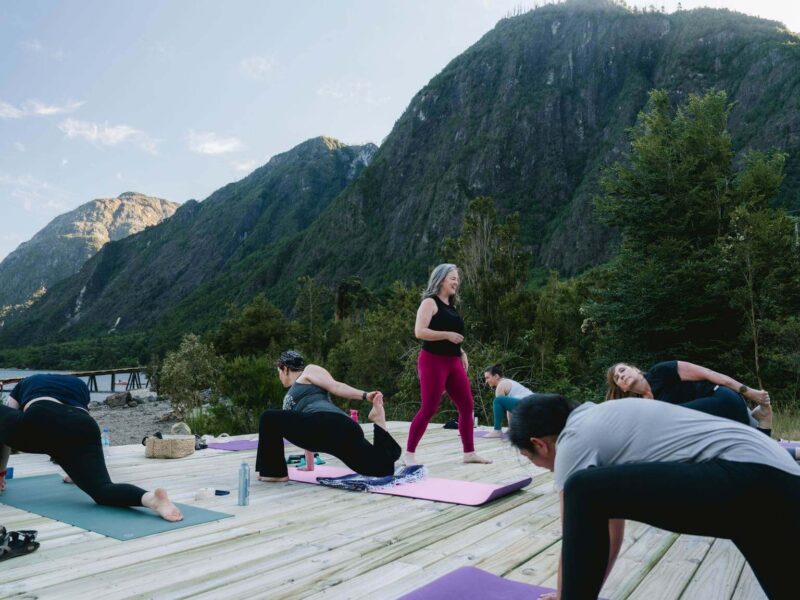
UnBound: Women’s Yoga Retreat in Patagonia, Chile
Apr 10 - 17, 2027
Rewild your spirit in Chilean Patagonia.
You Might Also Enjoy
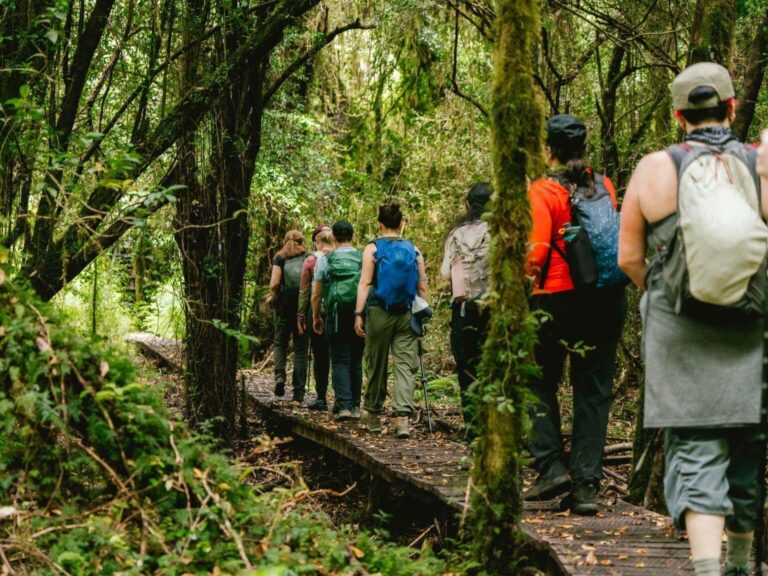
Not Sure You Want Yoga All Day? What an Adventure Wellness Retreat for Women Is Really Like
You don’t have to love yoga to love an adventure wellness retreat for women. On…

What to Pack for a Yoga Retreat in Mallorca: The Sol & Soul List, Day by Day
Most packing lists for a yoga retreat in Mallorca are written for a generic week.…

Yoga Retreats in Spain: How to Choose (Mallorca vs. Ibiza vs. Andalusia vs. Catalonia)
If you’ve been searching for yoga retreats in Spain, you’ve probably noticed the same thing…