
Patagonia Mushroom Season: A Guide to Fungi in Chile in Autumn
13 years · 40+ retreats · 700+ women

Patagonia mushroom season occurs during the southern autumn, roughly March to June, and peaks in April and May. This is when the temperate rainforests of southern Chile do the thing they’re quietly famous for: the rain comes, the temperature drops, and the forest floor erupts into violet, orange, coral, and red.
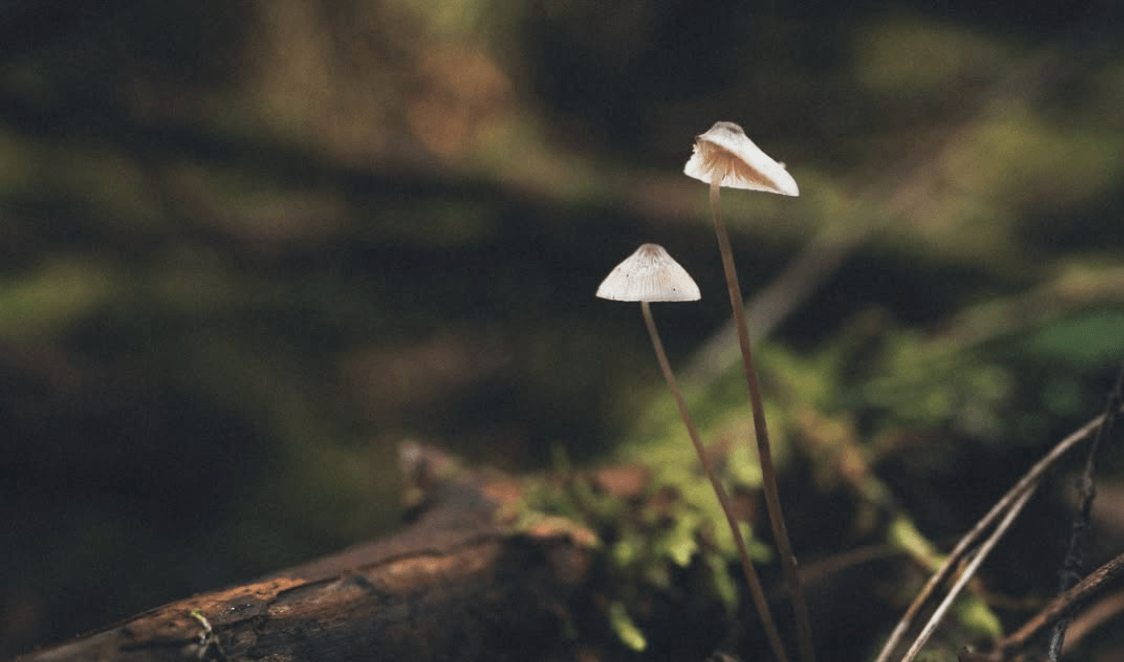
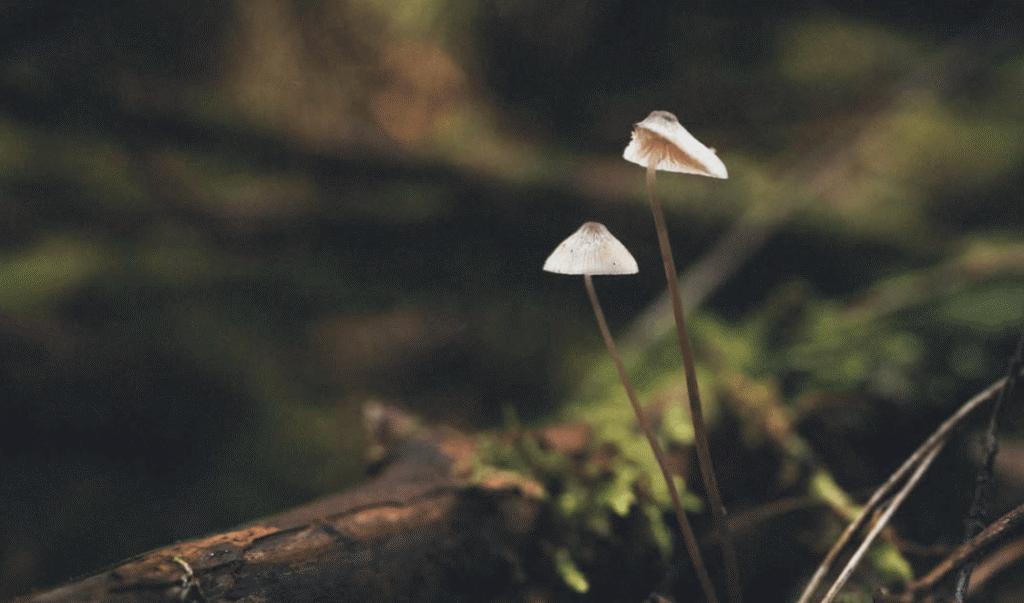
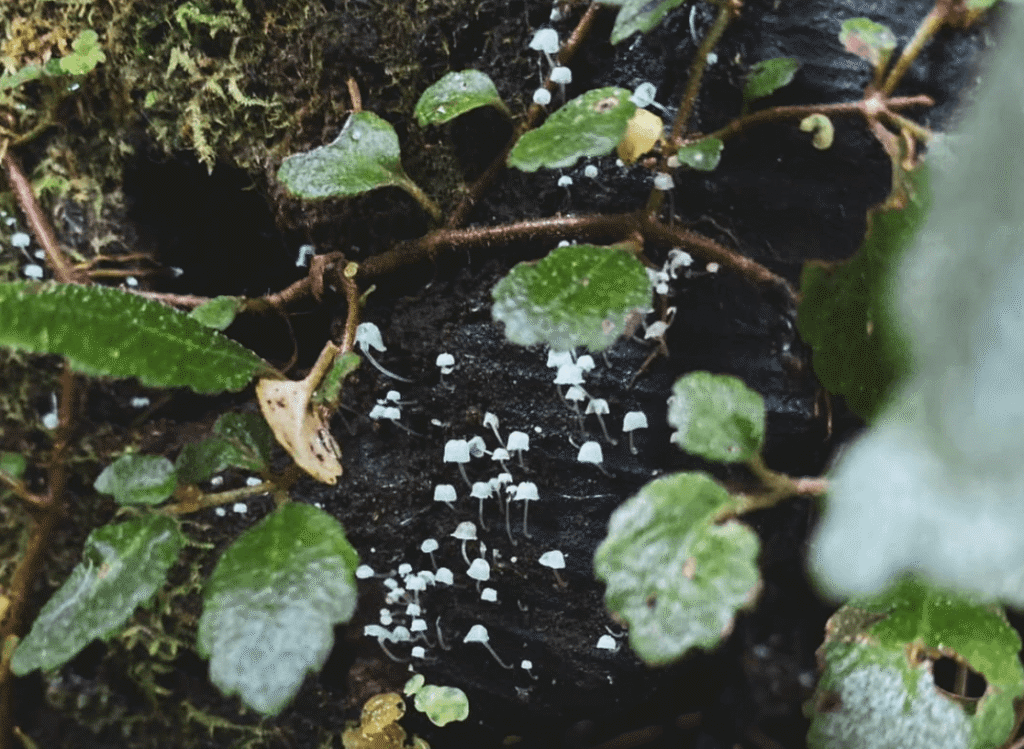
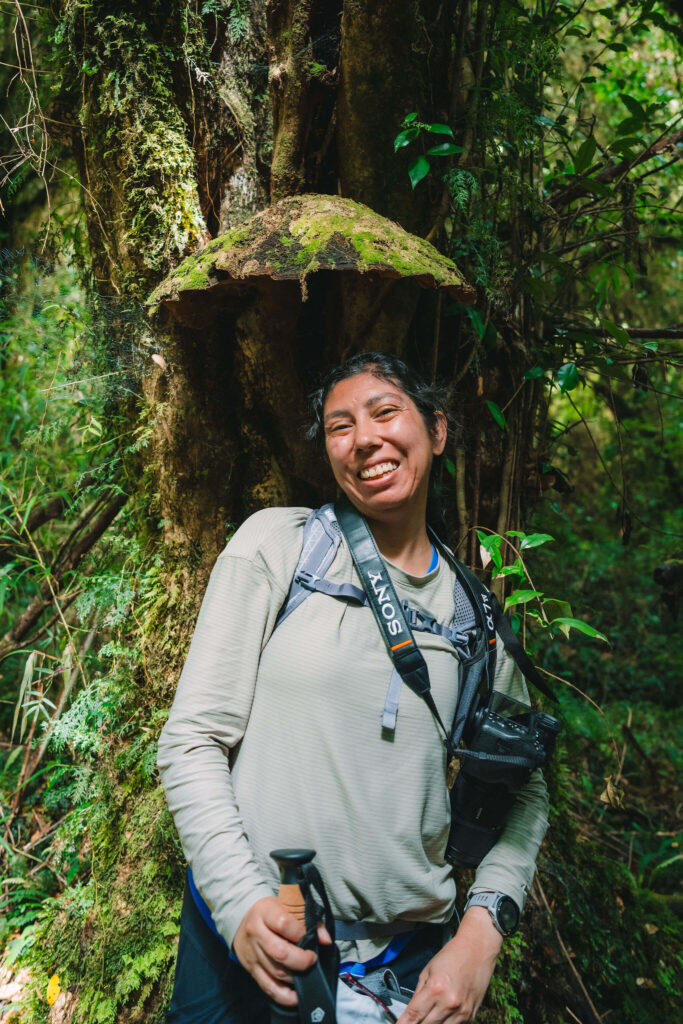
I didn’t go to Patagonia for the fungi. I went for the mountains and the water and the horses. But the guides, the manager, the staff, kefpt talking about something smaller… and the month of April in the Puelo Valley. The pace of the group slows down as everyone stops and crouches near the earth. They weren’t stopping for the views — but for things the size of a thumbnail. Somebody crouches with an “ooh” and an “awe”, and then everybody crouches, and five minutes disappear.
That’s what I want to tell you about.
In this post
- When is mushroom season in Patagonia?
- Why are Patagonian forests so good for fungi?
- What mushrooms will you see in Patagonia in April?
- Chile was the first country in the world to protect fungi by law
- Can you pick mushrooms in Chile?
- How does it compare to mushroom season in the Pacific Northwest?
- What fungi have to do with a yoga retreat
- How to actually see fungi on a trip to Patagonia
- FAQ
When is mushroom season in Patagonia?
Mushroom season in Patagonia is autumn — March through June in the southern hemisphere, with the peak in April and May. Fungi need moisture and cool temperatures to fruit, and autumn in the Chilean Lake District delivers both in quantity.
A few species run on different clocks. Digüeñes and llao llao (Cyttaria species, the orange golf balls that grow in clusters on southern beech branches) fruit in spring, and morels come up in spring too, especially in ground that burned the year before. But the great autumn flush — the one that turns a familiar trail into somewhere you’ve never been — is April and May.
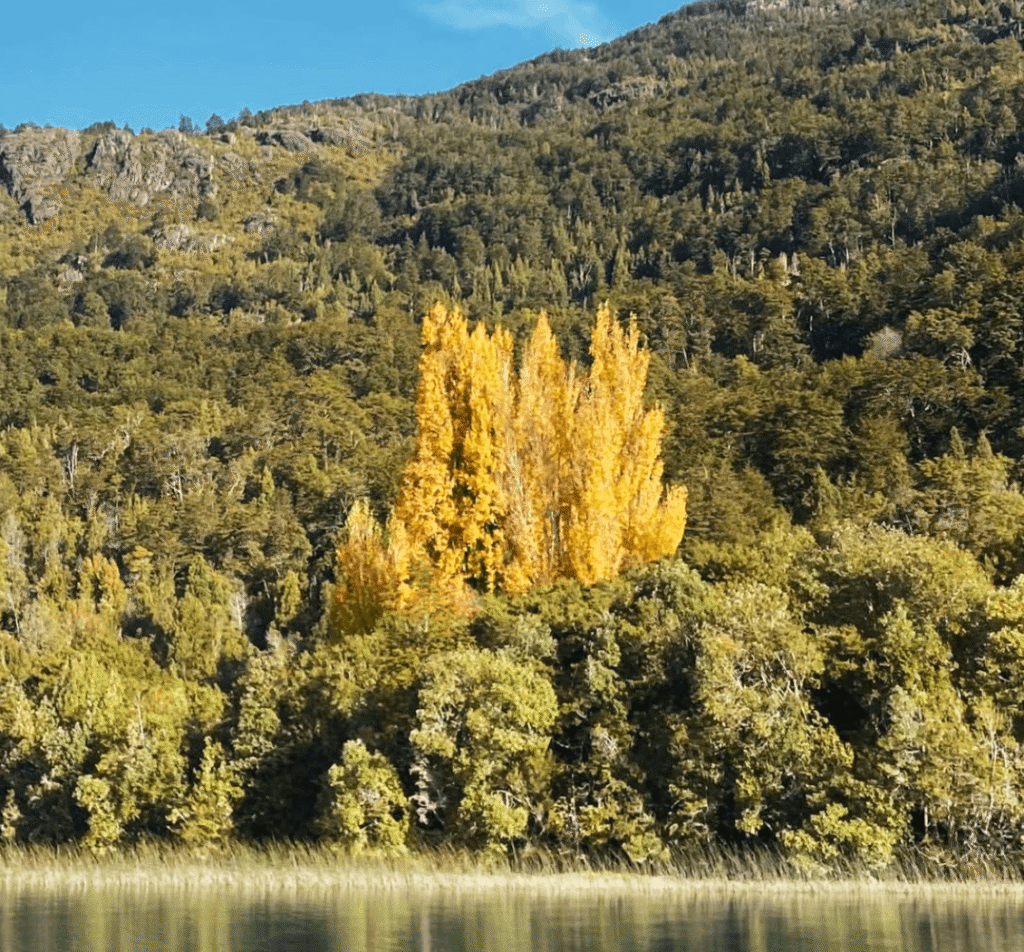
That’s also, not coincidentally, the best month to be in northern Patagonia for every other reason. Cool days, fall color, no crowds, no biting flies. I wrote about all of that in Patagonia in April.
Why are Patagonian forests so good for fungi?
Because southern beech forest is one of the great fungal partnerships on earth. Nothofagus — the southern beech genus that dominates these forests — forms ectomycorrhizal relationships with an enormous range of fungi, meaning the trees and the fungi trade with each other underground. The fungi pass water and nutrients to the roots. The tree pays in sugar.
The numbers are genuinely startling. A 2023 study of Andean-Patagonian Nothofagus forests turned up 1,125 fungal taxa across 131 orders in the root systems alone — most of which never produce a mushroom you could see. What you spot on the forest floor is the fruiting body. The organism is the network under your feet, and it is vast.
Two other things stack the deck. These are temperate rainforests — the Chilean Lake District takes over 130 inches of rain a year — and they’re geographically isolated, cut off by the Andes on one side and the Pacific on the other, so a lot of what grows here grows nowhere else.
And what I loved learning and haven’t been able to stop thinking about since I read it: in that same study, older trees supported more fungal diversity than younger ones. The longer a tree has been standing, the richer the life it’s in relationship with.
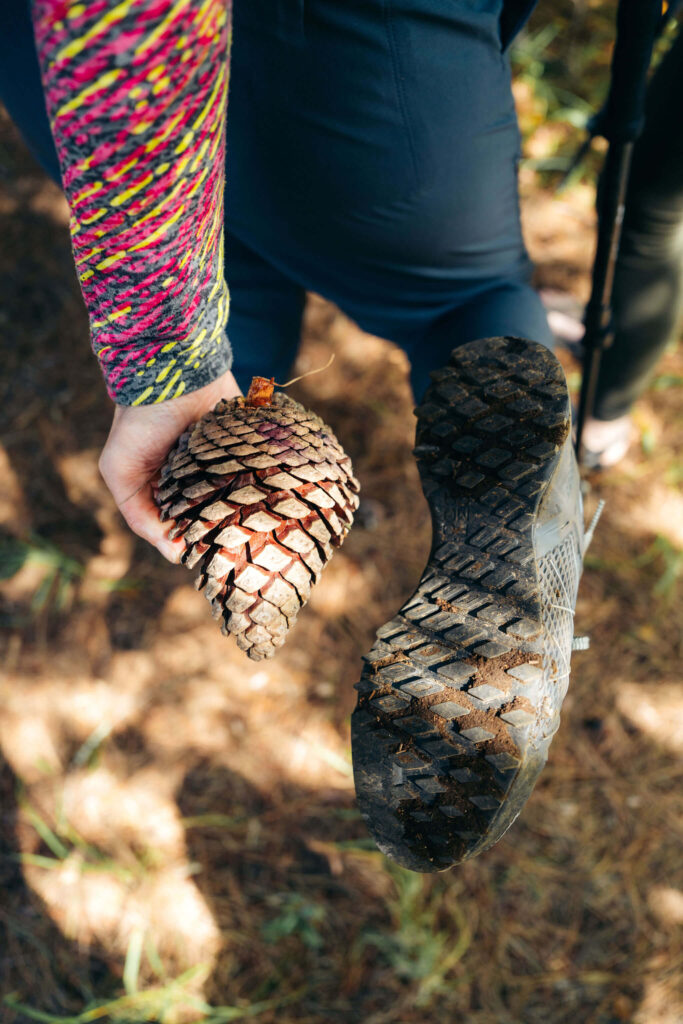
What mushrooms will you see in Patagonia in April?
Expect violet, orange, yellow, and the classic red-and-white — in southern beech forest, on rotting logs, and in the moss. The ones most likely to stop you:
- Cortinarius magellanicus — a deep violet mushroom found from the Maule region south to Magallanes. Photographs never quite get the color.
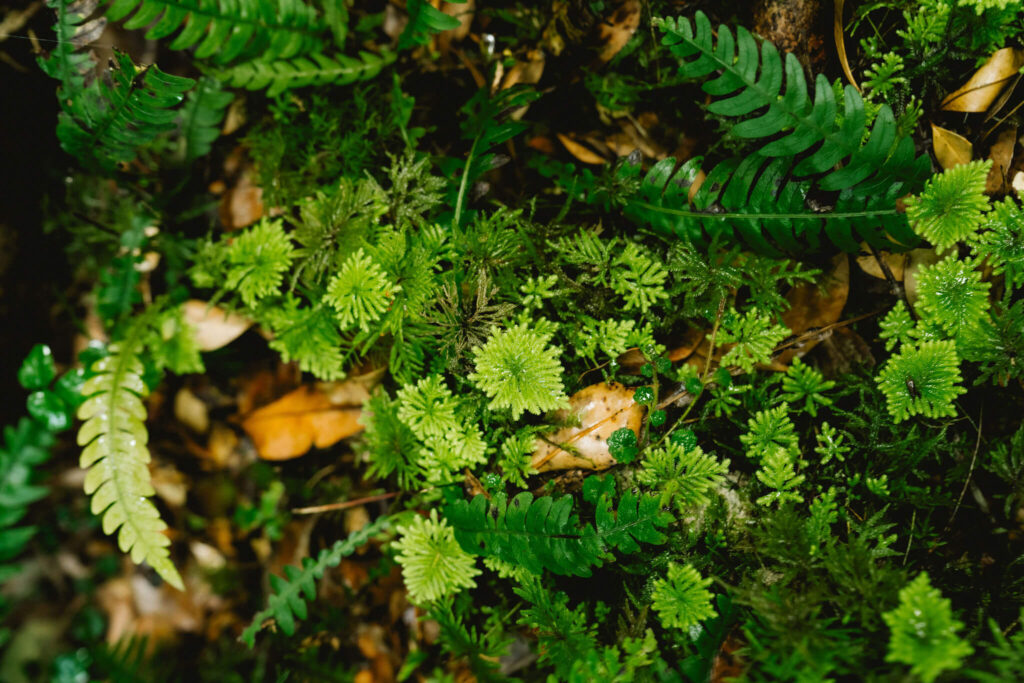
- Coral fungi (Ramaria species, “changle”) — yellow and branching, growing up out of the moss like something that belongs on a reef. Common in temperate rainforest from Biobío to Los Lagos.
- Amanita muscaria — the red cap with white flecks. The storybook mushroom, the one from every fairy tale illustration you’ve ever seen. Toxic. Beautiful.
- Mycena species — tiny, sometimes blue, growing on dead wood. You need to be close to the ground and looking to find these, which is the point.
- Grifola gargal — a prized native species that fruits in autumn and winter on Nothofagus obliqua, and reportedly smells strongly of almonds.
- Clavaria and other coral fungi — including electric-violet species that look genuinely artificial.
And one you probably won’t see but should know about: loyo (Butyriboletus loyo), a large native bolete long prized by Mapuche communities. It’s now listed as Endangered. Its decline is a big part of why Chile started paying attention to fungi in the first place.
Chile was the first country in the world to protect fungi by law
In 2013, Chile became the first country on earth to include fungi in its environmental legislation, through a reform to Law. Before that, environmental impact assessments essentially everywhere considered plants and animals — and simply did not see fungi at all.
That change came largely through the work of Chilean mycologist Giuliana Furci and the Fungi Foundation, the first organization in the world dedicated to protecting fungi. The reform made it possible to formally assess fungal species; by 2024, 138 native Chilean species had been evaluated for the IUCN Red List.
The Foundation is also behind a small change in language that I love. They coined “funga” — to sit alongside fauna and flora. Three kingdoms, three words. It’s now used by the IUCN and National Geographic.
I bring this up because it reframes what you’re looking at. When you’re crouched over a violet mushroom in a Chilean forest, you’re not looking at scenery. You’re in the one country that decided this kingdom was worth writing into law first.
Can you pick mushrooms in Chile?
Not in national parks, and not without permission on private land. CONAF, Chile’s forestry agency, explicitly prohibits cutting, uprooting, or removing plants, algae, fungi, or lichens in national parks without a scientific permit. Commercial harvest requires documentation, and gathering on private land needs the landowner’s consent.
There’s a second reason to keep your hands off, which matters more. Identification here is genuinely hard, many species are found nowhere else, and at least one prized edible is endangered. Chile has a real and beautiful foraging culture — but it belongs to people who grew up in these forests and learned from someone who knew.
So: look, photograph, leave them where they are. That’s the whole practice, and it’s more than enough.
Come see it in person
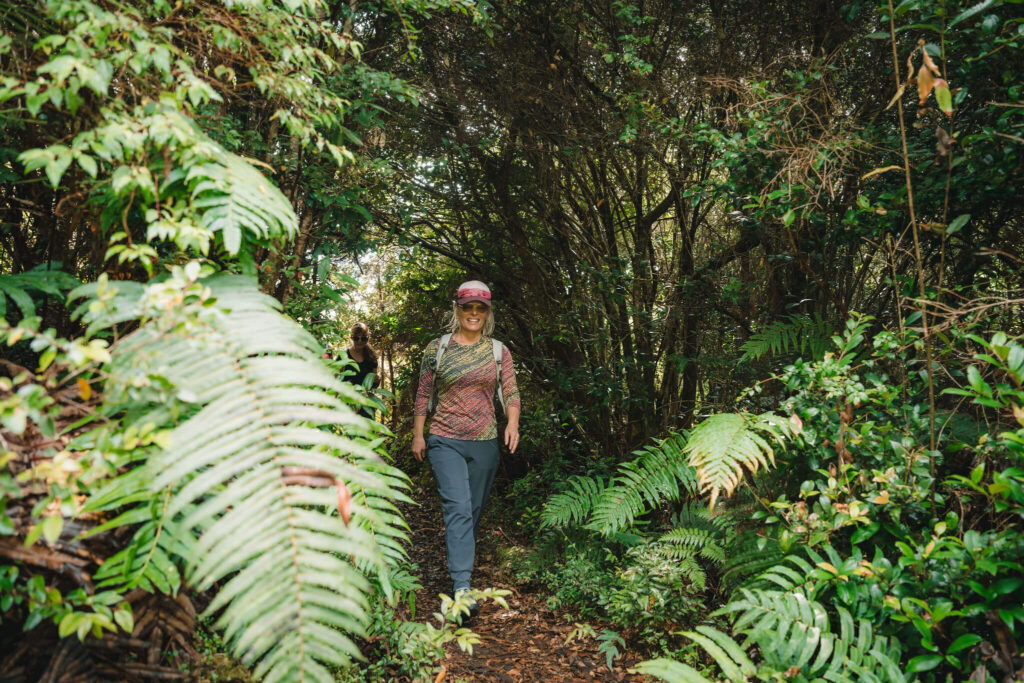
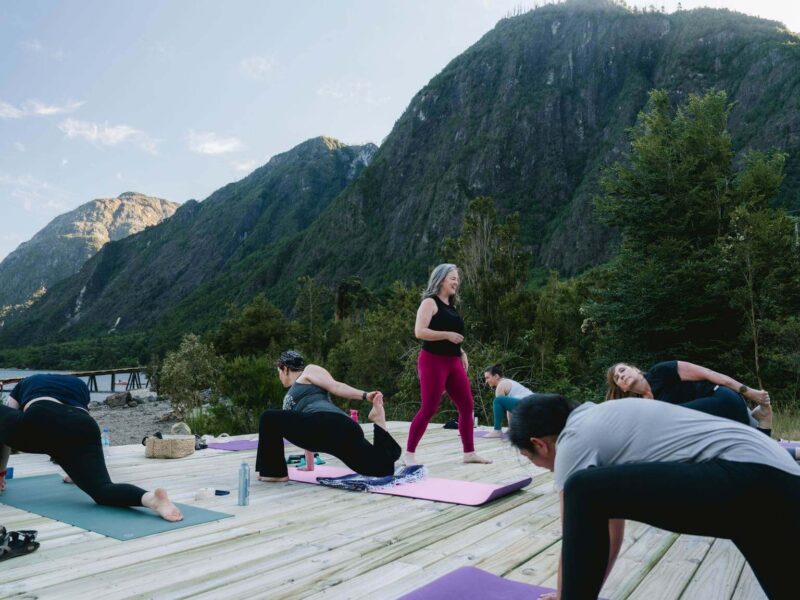
Patagonia UnBound — our women’s yoga and adventure retreat in the Puelo Valley, Chile — runs April 10–17, 2027, in the middle of mushroom season. Fourteen women. Boats into gaucho country, kayaking on Lago Tagua Tagua, volcanic hot springs under Volcán Yate, and two yoga practices a day in a valley with no cell service. From $4,497.
See the retreat and full itinerary →
Not ready yet? Get the Patagonia packing list — including the one small piece of gear that makes fungi season much better.
How does it compare to mushroom season in the Pacific Northwest?
The rhythm is nearly identical; the cast is completely different. Both are maritime temperate rainforests with a wet autumn flush, and if you’ve hunted chanterelles on the Oregon coast, the feeling of the Chilean forest in April will be immediately familiar — the damp, the moss, the low light, the way you start walking with your eyes down.
But the PNW’s fungal community is built around conifers: Douglas fir, hemlock, spruce. Patagonia’s is built around southern beech, a genus that doesn’t grow wild in North America at all. So the species are largely different, and a meaningful number of them are endemic. Your field guide from home is close to useless, which I find delightful rather than frustrating.
One more difference. PNW mushroom season is a harvest culture — you go out with a basket and a knife. Chilean mushroom season, for a visitor, is a looking culture. You go out with a camera.
What fungi have to do with a yoga retreat
More than I expected, and not in a metaphorical way — in a practical one.
Looking for fungi forces you to walk slowly and look closely at something small. That’s it. And it turns out to be one of the more reliable ways to get a busy mind to actually be present. Most of the women who come on our retreats spend their lives with attention that’s fragmented across other people’s needs. Handing that attention a single violet mushroom in the moss does something a guided meditation sometimes can’t.
It’s also just fun. Genuinely, uncomplicatedly fun — the kind of looking most of us haven’t done since we were seven years old and turning over rocks. The fungi walks produce more laughing than anything else on the schedule. Grown women on their knees in wet moss, calling each other over, delighted.
You don’t have to earn that. You don’t need a reason to spend twenty minutes looking at something the size of your thumbnail. That’s not a break from the real work of the retreat. That is it.
And back to the thing I couldn’t stop thinking about: older trees support more fungal diversity. The longer they’ve been standing, the more life they’re in relationship with. I’m not going to over-explain that one. I just think most of the women on these trips are around forty-five, and have quietly started believing the opposite about themselves. And this is the place that reawakens our spirit.
How to actually see fungi on a trip to Patagonia
Go in autumn, walk slowly, and get low. The practical version:
- Go in April or May. March works; June is cold and services thin out.
- Look after rain, not during a dry stretch. A wet morning followed by a clear afternoon is the ideal.
- Get off the main trail visually, not physically. The best things are on rotting logs, at the base of old trees, and in deep moss six feet from where everyone else is walking.
- Bring a hand lens. A cheap 10x loupe transforms this. It is the single best piece of gear for the trip, and it weighs nothing.
- Bring a camera that focuses close. Your phone’s macro mode is better than you think. Get the lens down at the mushroom’s level rather than shooting down at it.
- Go with someone who knows the forest. Our guides live in this valley. They know which log to check.
- Don’t pick anything. Covered above, and worth repeating.
Patagonia mushroom season FAQ
When is mushroom season in Patagonia? Patagonia mushroom season is the southern autumn — March through June — with peak fruiting in April and May. Cool temperatures and autumn rain trigger the largest flush of the year in the temperate rainforests of southern Chile and Argentina.
What mushrooms grow in Patagonia? Patagonian Nothofagus forests support an enormous fungal community, including violet Cortinarius magellanicus, yellow coral fungi (Ramaria, known locally as changle), Amanita muscaria, tiny Mycena species on dead wood, Grifola gargal, and the endangered native bolete loyo (Butyriboletus loyo). Many species are found nowhere else on earth.
Can you forage mushrooms in Chile? Not in national parks. CONAF prohibits removing plants, algae, fungi, or lichens from national parks without a scientific permit, commercial harvest requires documentation, and foraging on private land requires the landowner’s permission. Visitors should photograph rather than pick — identification is difficult and at least one prized native species is endangered.
Is Chile good for mushrooms? Chile is one of the best places in the world to see fungi. Its temperate rainforests are geographically isolated and highly endemic, and in 2013 Chile became the first country in the world to include fungi in its environmental legislation.
What is Darwin’s fungus? Darwin’s fungus (Cyttaria darwinii) is a bright orange, golf-ball-shaped fungus that grows in clusters on southern beech trees, named for Charles Darwin, who encountered it in Tierra del Fuego during the voyage of the Beagle. It was a food source for Indigenous Fuegian peoples. It fruits in spring rather than autumn.
Why does Nothofagus forest have so many fungi? Southern beech forms ectomycorrhizal partnerships with a vast range of fungi, trading sugar for water and nutrients underground. A 2023 study of Andean-Patagonian Nothofagus forests identified 1,125 fungal taxa across 131 orders in root systems alone, and found that older trees supported greater fungal diversity than younger ones.
Is mushroom season a good time to visit Patagonia generally? Yes. April in northern Patagonia brings mild days around 57°F, peak fall color in the southern beech forests, far fewer visitors than summer, and no tábanos — the biting horseflies that make midsummer difficult. Autumn is also when the region’s fungi are at their best.
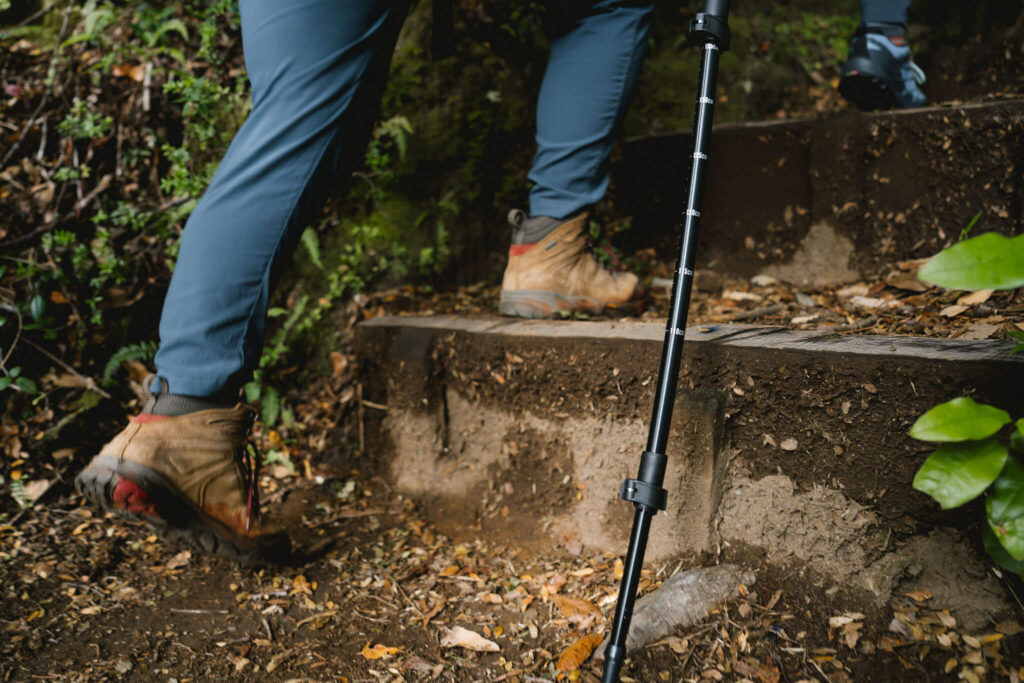
Do I need to be an experienced hiker to see fungi in Patagonia? No. Fungi walking is slow by definition — you cover less ground and look more closely. Comfort walking a few miles on uneven, often wet ground is enough, and good waterproof boots matter far more than fitness.
Go look at something small
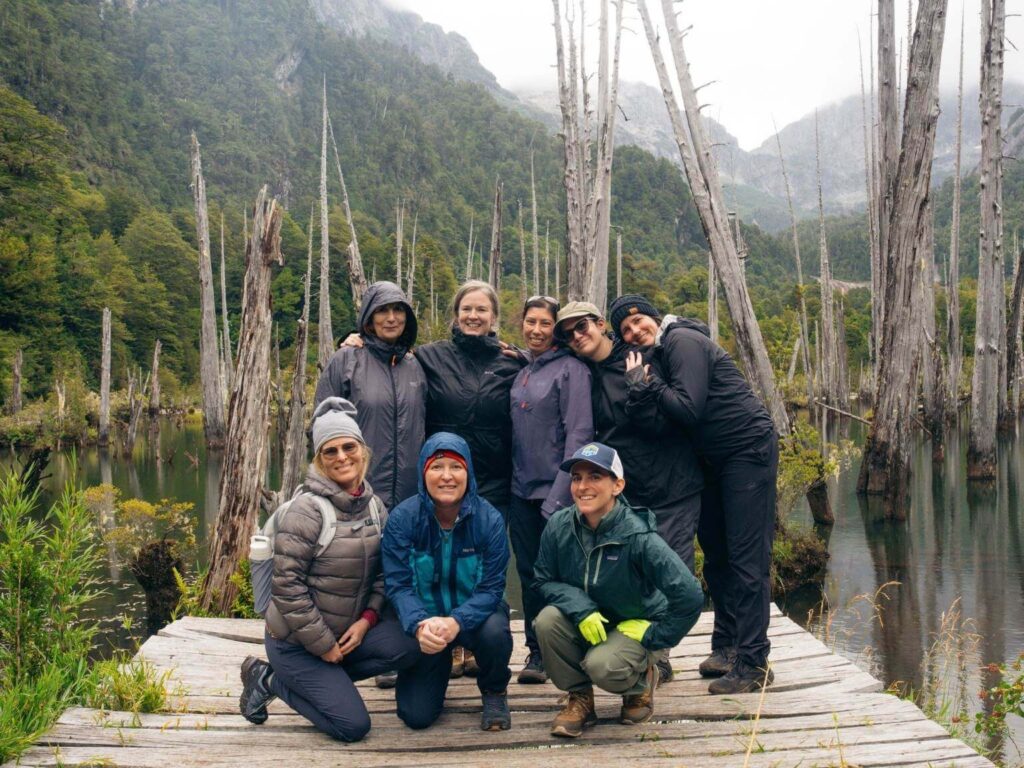
There’s a version of a trip to Patagonia that’s all summits and superlatives. This one’s different. This is the version where you spend a week walking slowly through an old forest in the rain, on your knees in the moss, delighted by something most people walk straight past, kayaking across glassy lakes, soaking your bones in woodfired hot tubs, and moving mindfully on your mat.
If that sounds like exactly what you need, here’s the specific next step.
Patagonia UnBound · Puelo Valley, Chile · April 10–17, 2027 · 14 women Shared double from $4,997 · Quad from $4,497 · Private single $6,997
Bring the hand lens.
About the Author
Autumn Adams
E-RYT, YACEP, Founder of Ambuja Yoga
Autumn Adams (E-RYT 500, YACEP) is the founder of Ambuja Yoga, where she's led women's yoga retreats since 2014 — 40+ retreats and 700+ women across Oregon, North Carolina, Sedona, Patagonia, Greece, Mallorca, and Thailand. Her work has been featured in Insider, Shape, Zappos, Asia Spa, Direct Holiday, and Bend Nest, and she's the author of The Little Book of Mudra Meditations.
Upcoming Retreats
Ready to experience the magic for yourself? Explore our upcoming retreat offerings.

 Popular
UnBound: Women’s Yoga Retreat in Patagonia, Chile
Apr 10 - 17, 2027
Rewild your spirit in Chilean Patagonia.
You Might Also Enjoy

What to Pack for a Yoga Retreat in Mallorca: The Sol & Soul List, Day by Day
Most packing lists for a yoga retreat in Mallorca are written for a generic week.…

Festes del Rei en Jaume: Why You Should Stay One More Day in Mallorca
Every year, the town fifteen kilometers down the hill from our finca reenacts the night…
Mallorca in September and Late August: What It’s Really Like
The first question I get about the Mallorca retreat isn’t about the yoga. It’s about…