
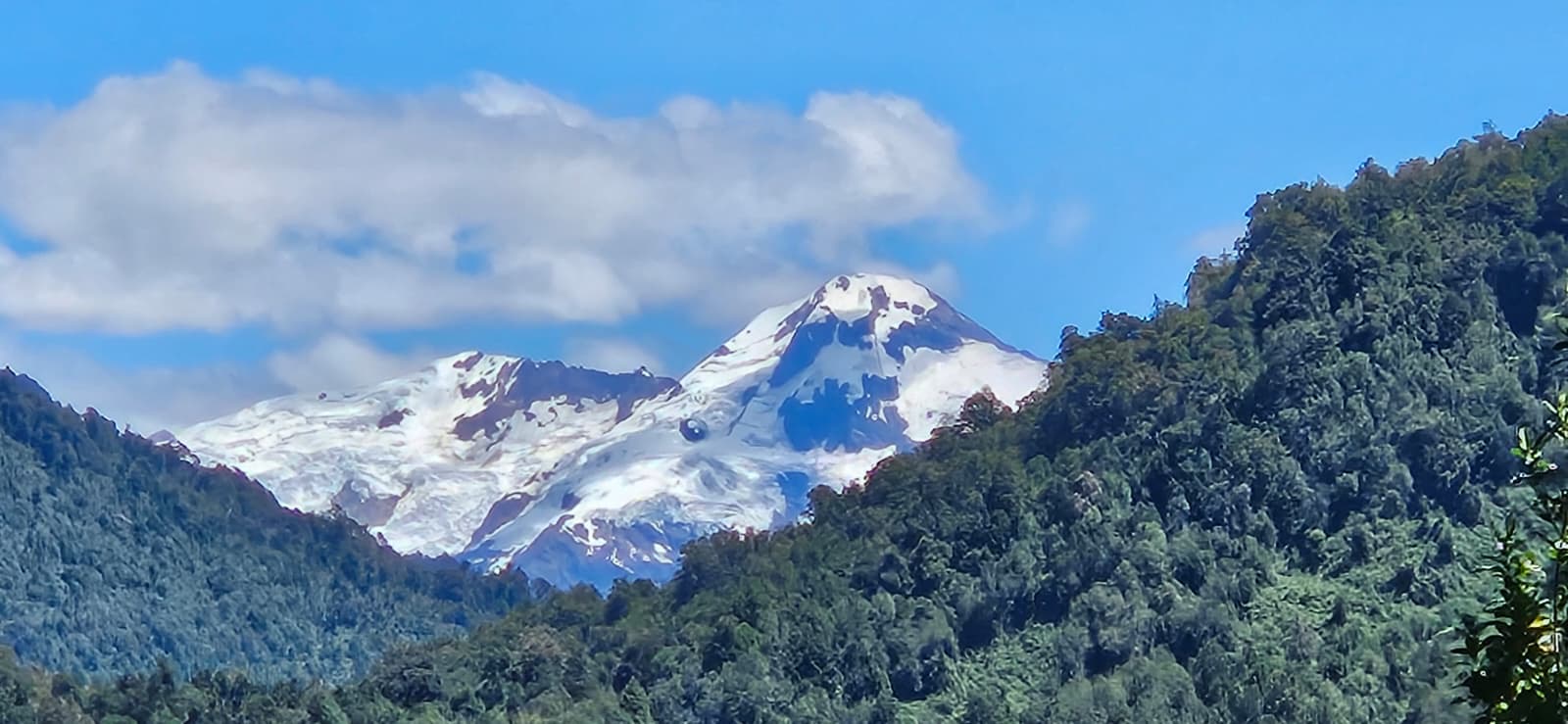
How to Get to the Puelo Valley From the US (For Patagonia UnBound)
13 years · 40+ retreats · 700+ women



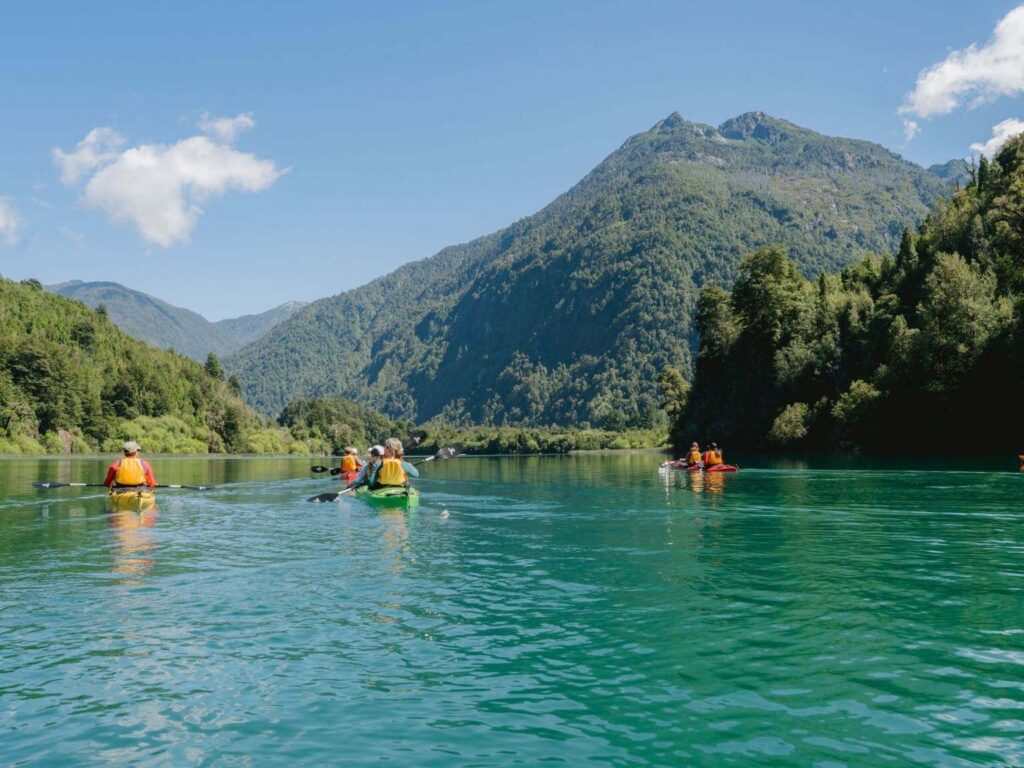
Getting to the Puelo Valley from the US is two to three flights and one drive: your home airport to Santiago, Santiago to Puerto Montt, a 25-minute taxi to Puerto Varas, and then we pick you up and drive you the rest of the way.
It’s the question I get asked more than any other about Patagonia UnBound, and it deserves a better answer than a line in the FAQ. So here’s the whole route, in order, with the one part that trips people up and the day count I’d actually recommend.
In this post
- The route at a glance
- Step 1: Fly to Santiago
- Step 2: The Santiago connection
- Step 3: Santiago to Puerto Montt
- Step 4: Puerto Montt to Puerto Varas
- Step 5: Puerto Varas to Tawa Refugio
- How many days to build in
- Going home
- Adding a day or two in Santiago
- Entry requirements and time zones
- FAQ
The route at a glance
Home → Santiago (SCL) → Puerto Montt (PMC) → Puerto Varas → Tawa Refugio, Puelo Valley
- US to Santiago: overnight, 8–11 hours depending on your departure city
- Santiago to Puerto Montt: about 1 hour 45 minutes
- Puerto Montt airport to Puerto Varas: 25 minutes by taxi
- Puerto Varas to Tawa Refugio: 2.5–3 hours, in our group van, included
Total travel time from most US cities: a day and a half, with a night in Puerto Varas before the retreat starts.
Step 1: Fly to Santiago
Every route to the Puelo Valley goes through Santiago (SCL). There’s no way around it, and there’s no reason to try — it’s a good airport and the connection is straightforward if you know what’s coming (see Step 2).
Nonstop from the US:
- Miami — LATAM and American, year-round, about 8 hours
- New York (JFK) — LATAM, about 10.5 hours
- Los Angeles — LATAM, about 10.5–11 hours
- Atlanta — Delta, about 9 hours
- Dallas/Fort Worth — American, seasonal, about 9.5 hours
If you’re not in one of those cities, you’ll connect through one of them. From Bend, where I live, the cleanest routing is a hop to LAX and the LATAM nonstop from there.
Almost all of these leave in the evening and land in Santiago the next morning. That’s the routing you want: you sleep on the plane, land around 6–9 am, and have the whole day to make the connection south.
Booking tip: if you can, book the Santiago–Puerto Montt leg on the same ticket as your international flight (LATAM makes this easy). If your inbound flight is delayed, the airline rebooks you on the next flight south for free. On separate tickets, a missed connection is your problem and your money.
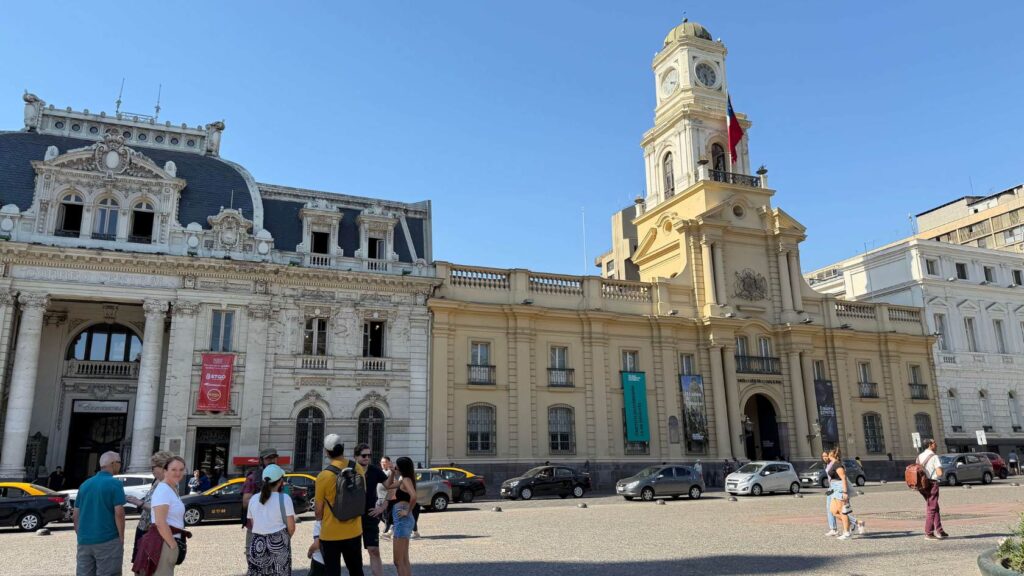
Step 2: The Santiago connection (read this part)
This is the one thing that catches people.
Your checked bag does not fly through to Puerto Montt. Even on a single ticket with the same airline, Chile requires you to clear immigration, collect your bag, walk it through customs, and re-check it for the domestic flight. Every time.
Here’s the sequence:
- Immigration. Land at Terminal 2 (international), go through passport control. US citizens don’t need a visa. You’ll get a tourist card or PDI slip — keep it with your passport, you’ll need it to leave.
- Baggage claim. Wait for your bag at the international carousel.
- Customs (SAG). Chile has some of the strictest agricultural rules in the world. Declare any food, plant, or animal product on the form — including trail mix, dried fruit, honey, jerky, seeds. They X-ray bags and run dogs, and the fines are real. My advice: don’t bring snacks. There’s good food waiting for you.
- Walk to Terminal 1 (domestic). It’s about 15 minutes on foot, or there’s a free shuttle. Signs say “Vuelos Nacionales.”
- Re-check your bag. At the LATAM (or Sky/JetSMART) counter or bag drop.
- Domestic security and your gate. Domestic flights close 30 minutes before departure.
Allow at least 3 hours between flights. Four if you’re on separate tickets or landing during a busy morning wave. The whole sequence takes 75–90 minutes when everything goes right, and it doesn’t always go right.
Step 3: Santiago to Puerto Montt
The flight is about 1 hour 45 minutes. LATAM, Sky Airline, and JetSMART all fly it, several times a day. LATAM is the most reliable and has the most departures; Sky and JetSMART are budget carriers and fine if you read the baggage fees carefully.
Ask for a window seat on the left side of the plane heading south. On a clear day you fly the length of the Andes and the volcanoes of the Lake District come up one after another before you land.
Puerto Montt’s airport is called El Tepual (PMC). It’s small. You’ll be out with your bag ten minutes after landing.
Step 4: Puerto Montt to Puerto Varas
Puerto Varas is 25 minutes from the airport. Options:
- Taxi from the rank outside arrivals. Pay in pesos or by card; have the name of your hotel written down.
- Uber or Cabify both work here.
- Hotel transfer — most Puerto Varas hotels will arrange a pickup if you ask when you book.
Don’t rent a car. You won’t need one, and you’ll be leaving it parked for a week.
Puerto Varas is a small lakeside town with German-Chilean roots, a view of two volcanoes, and enough good cafés and restaurants to make the arrival night feel like a reward instead of a layover. A yogi’s guide to Puerto Varas is coming.
Step 5: Puerto Varas to Tawa Refugio (we drive)
Retreat start: Saturday, April 10, 2027. We meet for lunch in Puerto Varas at 12:30 pm.
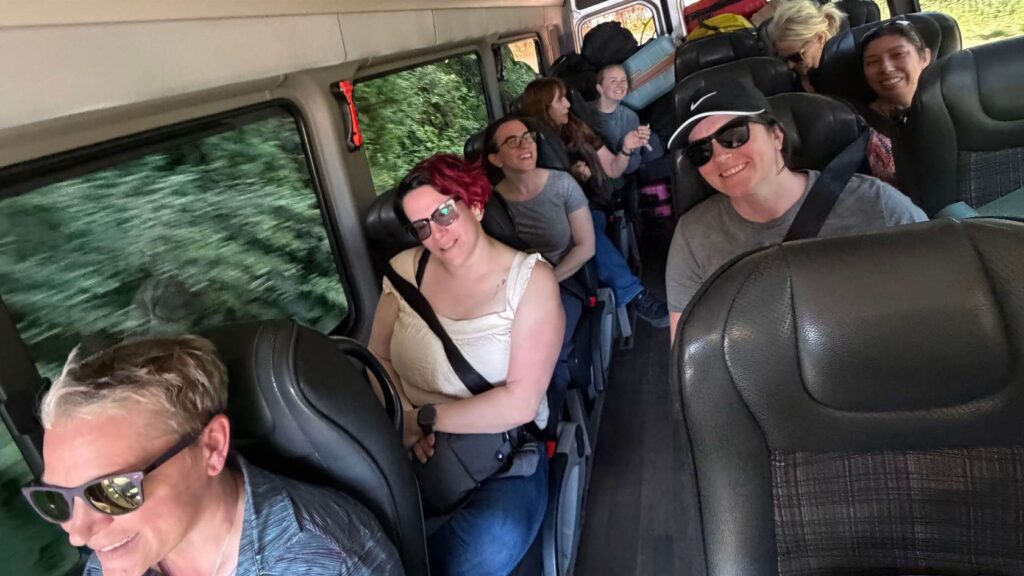
After lunch we load into the van and drive south together — around the lake, along the fjord through Cochamó, and up the Puelo Valley. It’s 2.5 to 3 hours and the road narrows and the mountains close in the whole way. The last cell signal fades somewhere past Cochamó. By the time you see Lago Tagua Tagua, you’re there.
The transfer is included. You don’t have to figure out anything after lunch.
How many days should you build in?
Arrive in Puerto Varas on April 8 or 9. I recommend the 8th.
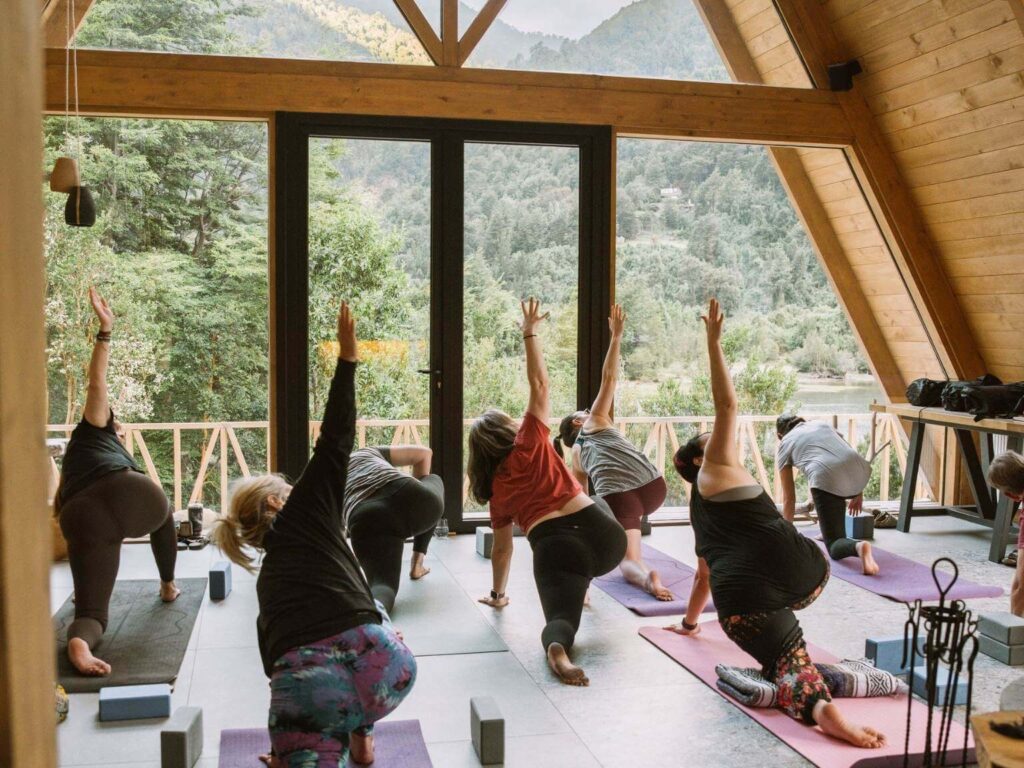
Here’s why. If you leave the US on the evening of April 7, you land in Santiago the morning of the 8th, fly south that afternoon, and reach Puerto Varas by evening. That gives you all of April 9 to sleep in, walk the lake, eat well, and shake off the flight before we meet on the 10th. You arrive at the retreat rested instead of jet-lagged, and the first morning practice actually lands.
Arriving on the 9th works too — it’s what most people do — but it means one overnight flight, one connection, and one taxi all landing on the day before the retreat starts. Any delay and you’re cutting it close.
Sample timeline (from the West Coast):
| Date | What’s happening |
|---|---|
| Wed, April 7 | Evening departure from LAX (or connect to Miami/Dallas/Atlanta) |
| Thu, April 8 | Land Santiago morning → connect → land Puerto Montt afternoon → Puerto Varas by dinner |
| Fri, April 9 | Free day in Puerto Varas |
| Sat, April 10 | 12:30 pm lunch, then the drive to Tawa |
| Sat, April 17 | Leave Tawa 11 am, at the airport by mid-afternoon, evening flight to Santiago, overnight flight home |
| Sun, April 18 | Home |
Eleven or twelve days door to door, eight of them at the retreat.
Going home
Retreat end: Saturday, April 17. We leave Tawa at 11 am and drop you at Puerto Montt airport by mid-afternoon.
Book your Puerto Montt–Santiago flight for 4 pm or later on April 17. From Santiago, most US-bound nonstops leave in the late evening, so a same-day connection home works if you’d rather not spend another night. If your inbound routing had a tight connection, consider a night in Santiago on the way out instead — it’s a good city for one dinner, and it takes the pressure off.
On the way home, the bag situation is simpler: on a single ticket, your bag can usually be checked through from Puerto Montt to the US. You’ll still clear exit immigration in Santiago and walk from Terminal 1 to Terminal 2.
Adding a day or two in Santiago
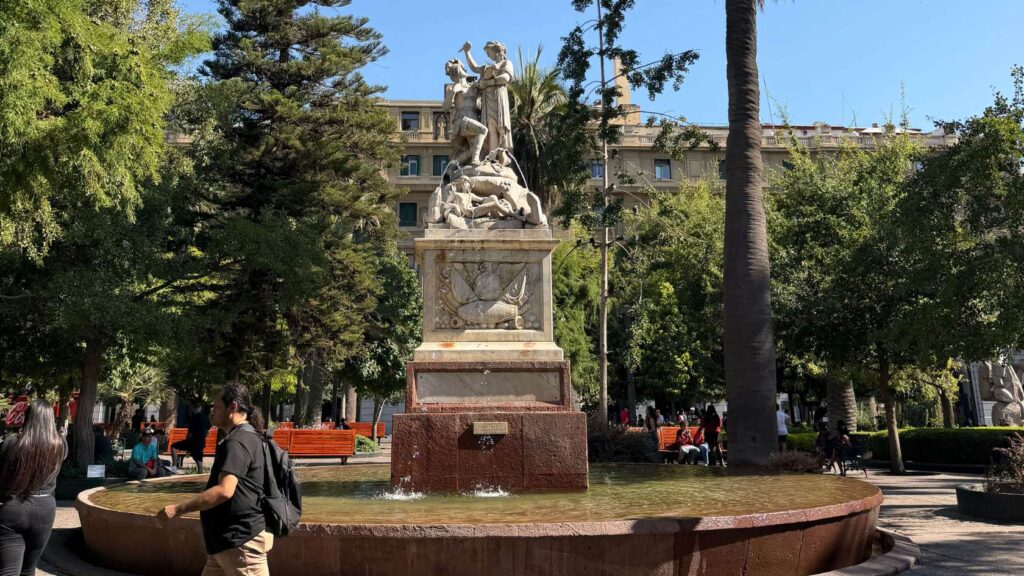
If you like cities, Santiago is worth a stop on one end of the trip. It’s a big, sunny, Andes-backed capital with good food, good wine, and a walkable center, and it’s the easiest way to turn the retreat into a real trip. Two nights is the sweet spot — I’d put them on the way home, when you’re not fighting jet lag and the retreat has already done its work.
Where to stay. Two neighborhoods, both central, both safe to walk in the evening:
- Lastarria — the old, leafy, café-and-bookshop quarter next to Cerro Santa Lucía and the Bellas Artes museum. Small boutique hotels, everything within a few blocks.
- Barrio Italia — a little further out, low-rise and quieter, full of design shops, antiques, and the kind of restaurants you’d pick for a long lunch.
What to see in two days:
- Cerro San Cristóbal — take the funicular up in the morning for the view of the whole city against the mountains.
- Mercado Central and La Vega — the fish market and the produce market. Go hungry.
- Museo de la Memoria y los Derechos Humanos — Chile’s museum on the dictatorship years. Quiet, heavy, and important context for the country you’re in.
- A wine day — the Casablanca or Maipo valleys are about an hour out, and a half-day tasting tour is easy to book from the city.
- Valparaíso — if you have a third day, the painted hill city on the coast is a 90-minute drive and a completely different Chile.
Eat empanadas de pino, order a pisco sour, and let someone take you for a late dinner. Santiago runs on a later clock than you’re used to.
That’s the short version. A full yogi’s guide to Santiago is coming — with the studios, the specific hotels, and the day-by-day.
Entry requirements, passports, and time zones
Visa: none. US citizens enter Chile for up to 90 days with a passport. There’s no fee, no e-visa, and no online form. If you see a “reciprocity fee” mentioned anywhere, that article is over a decade old.
Passport: valid for your whole stay. Six months of validity is the safe standard.
Tourist card: you’ll get a slip at immigration. Keep it with your passport. Some hotels ask for it because foreign tourists paying in US dollars are exempt from Chile’s accommodation tax.
Time zone: in April, Chile runs on the same clock as the US East Coast and three hours ahead of the West Coast. East Coast travelers get no jet lag at all. West Coast travelers get less than a trip to New York.
Travel insurance: required for the retreat, with medical and medical evacuation coverage, and proof due within 21 days of booking. Make sure it covers hiking, kayaking, and — if you’re adding it — horseback riding. Details are on the retreat page.
Money: cards work almost everywhere in Puerto Varas. Pull some pesos from an ATM at the Santiago or Puerto Montt airport for taxis and small purchases. There’s nowhere to spend money at Tawa except optional add-ons, which you can settle by card.
FAQ: getting to the Puelo Valley
Can I fly directly to Puerto Varas? No. The nearest airport is Puerto Montt (PMC), 25 minutes away. Every flight to Puerto Montt connects through Santiago.
Can I skip Santiago? Not realistically. There are overland routes from Argentina, but they add days and a border crossing. Fly through Santiago.
Should I book flights before I book the retreat? Reserve your spot first, then book flights. Spots are limited to 14 women and flights can be booked months out. Once your deposit is in, you’ll get a full travel guide with the exact meeting details.
What if my flight is delayed and I miss the Saturday lunch? Call or message us as soon as you know. If you can get to Puerto Varas by Saturday evening we can arrange a private transfer to Tawa (at your cost). This is the main reason I recommend arriving on the 8th.
Do I need to speak Spanish? No. English is common in airports, hotels, and in Puerto Varas. A few words go a long way in the valley, and I’ll teach you the ones that matter.
How much do the flights cost? As of this writing, US–Santiago round trips run roughly $700–$1,200 in economy depending on your city and how far out you book, and Santiago–Puerto Montt is usually $60–$150 round trip. Book the international leg 3–5 months out for the best fares.
Can I extend my trip before or after? Yes, and many women do. Chiloé Island is a ferry ride from Puerto Montt, Torres del Paine is a flight south, and Santiago’s wine valleys are an hour from the city. Extend-your-trip post coming soon.
Read next: Inside Patagonia UnBound: A Week at Tawa Refugio
Still deciding on the month? Read: Patagonia in April
Booked? Read: What to Pack for a Yoga Retreat in Patagonia
Ready to make the trip?
Patagonia UnBound runs April 10–17, 2027 at Tawa Refugio in the Puelo Valley. Fourteen women, two practices a day, boats, forest, and hot springs. From $4,497, with a $1,000 deposit and a payment plan available.
About the Author
Autumn Adams
E-RYT, YACEP, Founder of Ambuja Yoga
Autumn Adams (E-RYT 500, YACEP) is the founder of Ambuja Yoga, where she's led women's yoga retreats since 2014 — 40+ retreats and 700+ women across Oregon, North Carolina, Sedona, Patagonia, Greece, Mallorca, and Thailand. Her work has been featured in Insider, Shape, Zappos, Asia Spa, Direct Holiday, and Bend Nest, and she's the author of The Little Book of Mudra Meditations.
Upcoming Retreats
Ready to experience the magic for yourself? Explore our upcoming retreat offerings.
 Popular
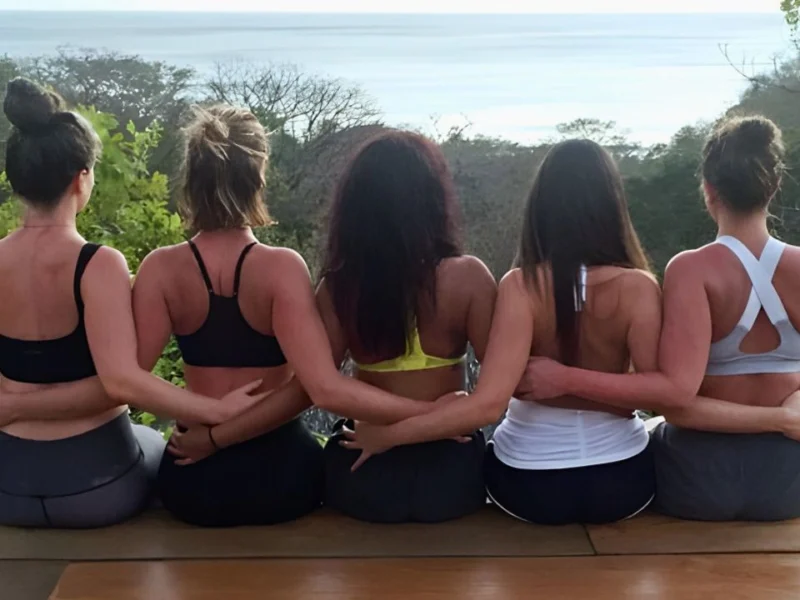
UnBound: Women’s Yoga Retreat in Patagonia, Chile
Apr 10 - 17, 2027
Rewild your spirit in Chilean Patagonia.
You Might Also Enjoy

What to Pack for a Yoga Retreat in Mallorca: The Sol & Soul List, Day by Day
Most packing lists for a yoga retreat in Mallorca are written for a generic week.…

Festes del Rei en Jaume: Why You Should Stay One More Day in Mallorca
Every year, the town fifteen kilometers down the hill from our finca reenacts the night…
Mallorca in September and Late August: What It’s Really Like
The first question I get about the Mallorca retreat isn’t about the yoga. It’s about…