
Fall Equinox Rituals: Harvesting, Herbs, and Yoga for the Seasonal Shift
13 years · 40+ retreats · 700+ women



Summer is softening into fall, and the plants around us are offering a quiet lesson in change. The vegetable garden is shifting from abundance toward rest. Nothing is wasted. Nothing is rushed. The season simply changes.
Perhaps we can learn to do the same.
This is a good time of year for a fall equinox ritual. Something simple that marks the turn instead of letting it slip past unnoticed. Below you’ll find what I’m harvesting right now, a three-herb tea blend for the shift, five yoga poses for coming inward, and a handful of journal prompts for the season ahead.
And you don’t need a garden for any of it. A bundle of herbs from the farmers market, a pot of mint on the windowsill, or a walk where you notice which trees are turning first will do. The practice is the noticing, not the acreage.
In this post:
- How Do You Know Summer Is Turning to Fall?
- What to Harvest in Late Summer and Early Fall
- Which Medicinal Herbs to Harvest Before Frost
- How to Harvest With Intention
- A Simple Three-Herb Fall Tea Blend
- Yoga for the Transition From Summer to Fall
- Fall Equinox Journal Prompts
- How to Create Your Own Fall Equinox Ritual
- Prepare Your Body for the Colder Months
- Questions About Seasonal Rituals and Herbs
How Do You Know Summer Is Turning to Fall?
The clearest signs are cooler mornings, a later sunrise, flowers setting seed instead of blooming, and plants beginning to move their energy down into the roots. In the garden, the change is impossible to ignore.
The mornings are cooler, and I need a blanket wrapped around me when I sit on the porch with my coffee. The sunrise is just a little later, too. The light begins to change. Flowers that seemed endless are putting out their final blooms. What was green and lush a few weeks ago is now covered in seed heads. Some plants are setting seed while others are beginning to die back. Soon it will be time to harvest the roots.
These changes can be subtle. One morning, summer is still very much here, and then suddenly the air feels different. The evenings arrive a little sooner. The garden is quieter. You find yourself reaching for a sweater.
Nature doesn’t resist the change of season. It moves with it. What would it look like for us to move through seasonal change with the same awareness? Rather than rushing to hold onto summer or jumping ahead to the busy-ness of fall, we can pause long enough to notice what is happening around us, and within us.
The transition from summer to fall is an invitation to pay attention.
We don’t have to put everything in order before we are allowed to rest.
What to Harvest in Late Summer and Early Fall
In late summer and early fall you’re gathering the last of the warm-weather crops, tomatoes, zucchini, and beans, while pumpkins finish coloring up and root vegetables like carrots and potatoes keep sizing up underground for a few more weeks.
What are you harvesting? What are you letting go of?
In my vegetable garden, I’m harvesting and canning tomatoes, seeing the last of the zucchini and beans, and admiring the beautiful color of the growing pumpkins. The carrots and potatoes aren’t quite ready, but soon.
There is something deeply satisfying about this part of the gardening year. Some of it is pure pleasure. Sticky hands. A tomato eaten standing up between the rows, still warm from the sun. The small, ridiculous pride of a full jar cooling on the counter.
After months of planting, watering, weeding, watching, and waiting, the garden begins to give back. We gather what has grown. We preserve what we can. We share the abundance. And we begin to let the garden rest.
This is also a beautiful time to think about seeds. What will you save for next year? Which plants performed especially well? What would you like to grow again? Saving seeds is one way of carrying the wisdom of this season forward.
Which Medicinal Herbs to Harvest Before Frost
Goldenrod, calendula, lemon balm, holy basil, mint, and the last of the California poppy are all ready to gather in late summer and early fall. As the season turns, the flowers and leaves finish up and the plant’s energy moves down into the roots.
Medicinal plants have their own seasonal rhythms, too.
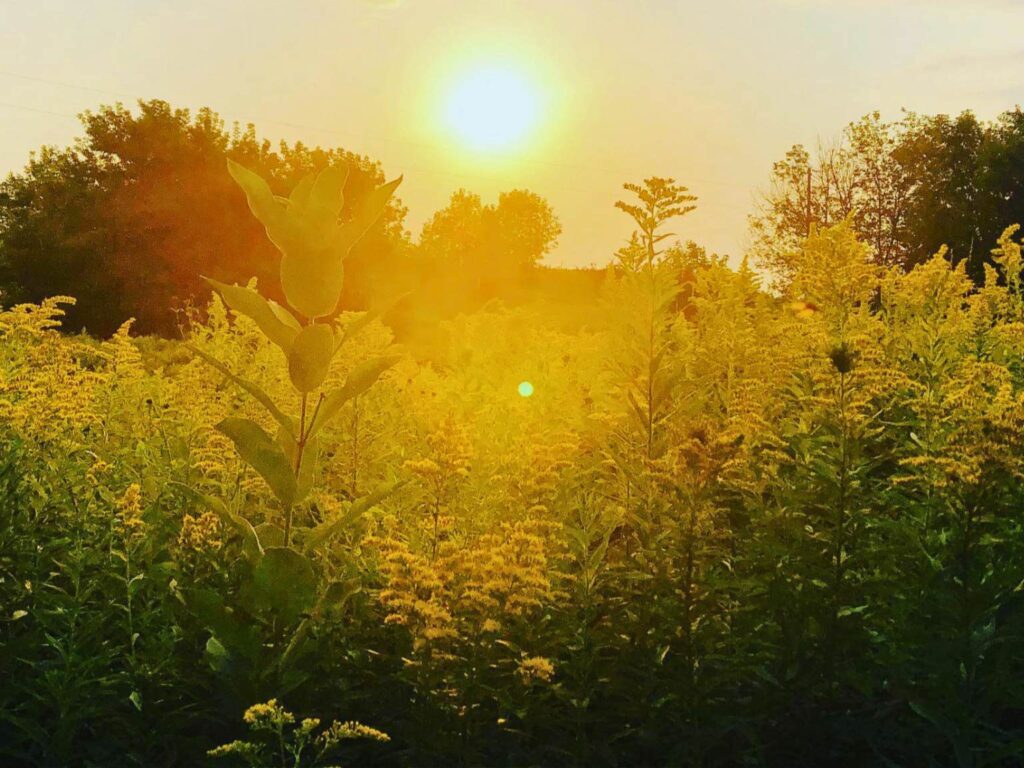
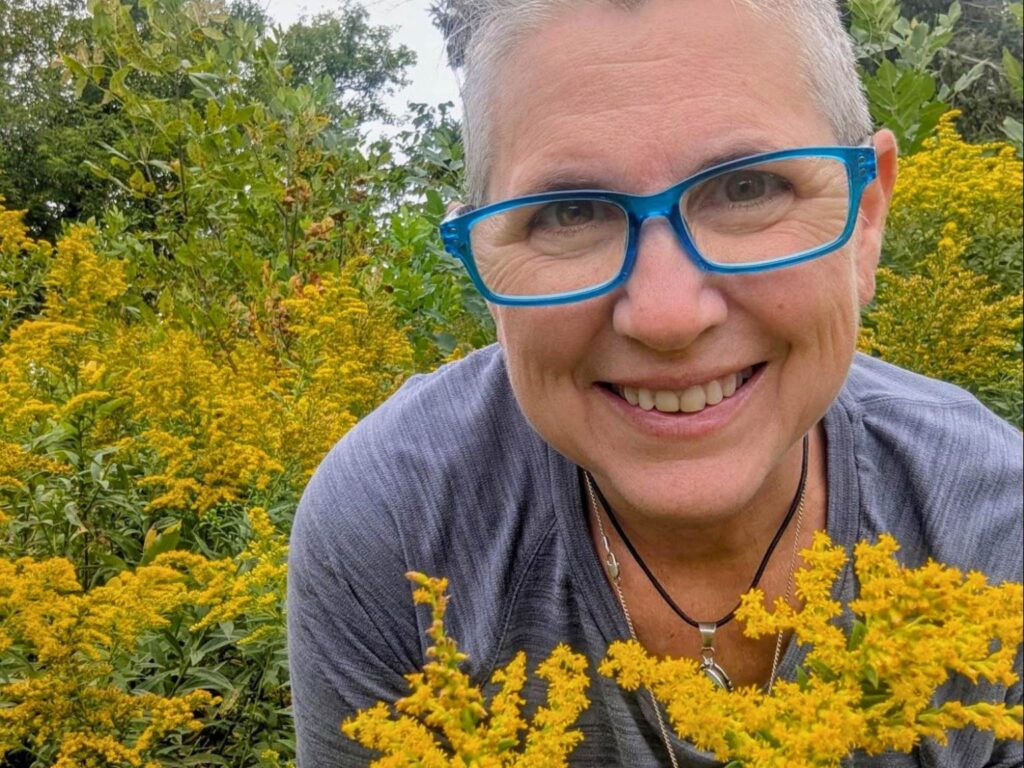
Goldenrod is at its peak. For me, goldenrod is one of the clearest signs that summer is taking its last breath. Its brilliant yellow flowers catch the late summer sunlight, and they are alive with activity. I love harvesting goldenrod for tea to keep for later in the season. Traditionally it’s used as a drying herb, the one herbalists reach for when there’s dampness and congestion hanging around, and that’s how I use it myself when I’ve caught a winter cold. It tastes great, too.
The sunflowers are changing. The towering flowers that followed the sun all summer begin to bow beneath the weight of their seeds. Their transformation is beautiful. The flower is no longer trying to bloom. It is becoming something else. Seeds for nourishment, for the next cycle of growth.
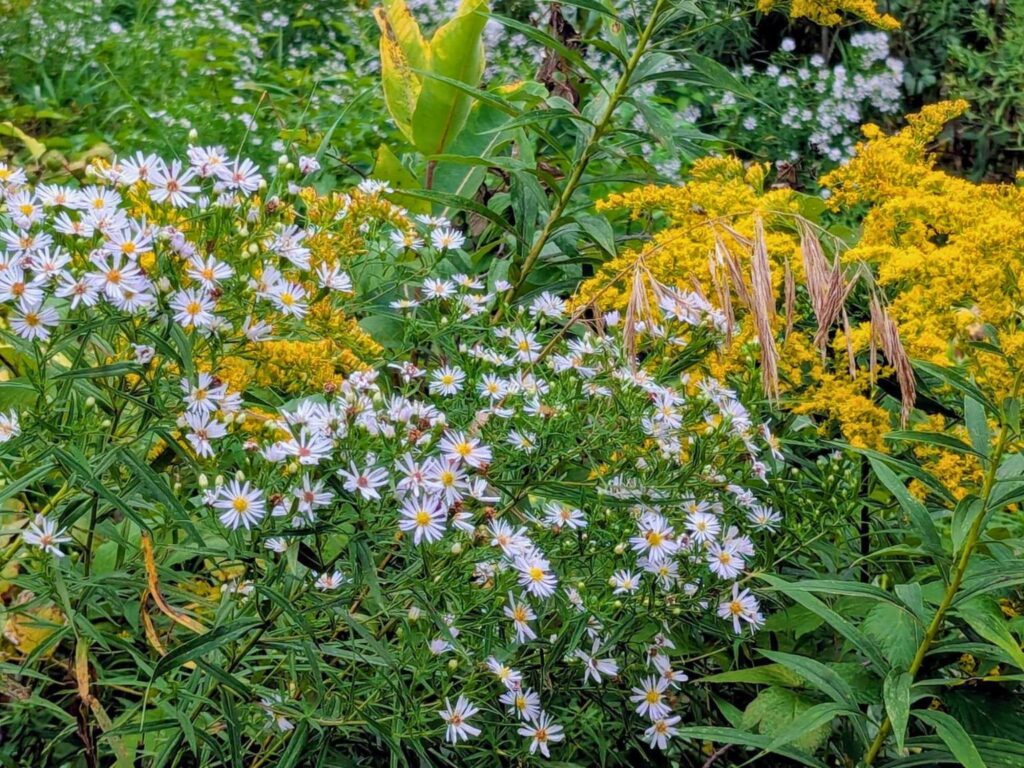
Then come the aster blooms. Their arrival feels almost like a passing of the torch. As some of the summer flowers fade, asters bring new color to the garden.
The calendula is still blooming while other plants begin to fade. Lemon balm, holy basil, and other herbs in my medicinal garden are nearing the end of their lush summer growth. The fast pace of summer flower harvest is winding down, and now the energy is moving into the roots.
I feel that same change in my own body and rhythm. I want to move a little slower. I find myself craving warmer food, warm tea, earlier evenings, and more quiet.
The garden teaches us that every stage has something to offer.
A note before you gather: I’m sharing traditional and personal uses of these plants, not medical advice. Harvest only what you can identify with certainty. If you’re pregnant, nursing, taking medication, or allergic to plants in the aster family (ragweed, daisies, chamomile), talk with your healthcare provider before adding a new herb to your routine.
How to Harvest With Intention
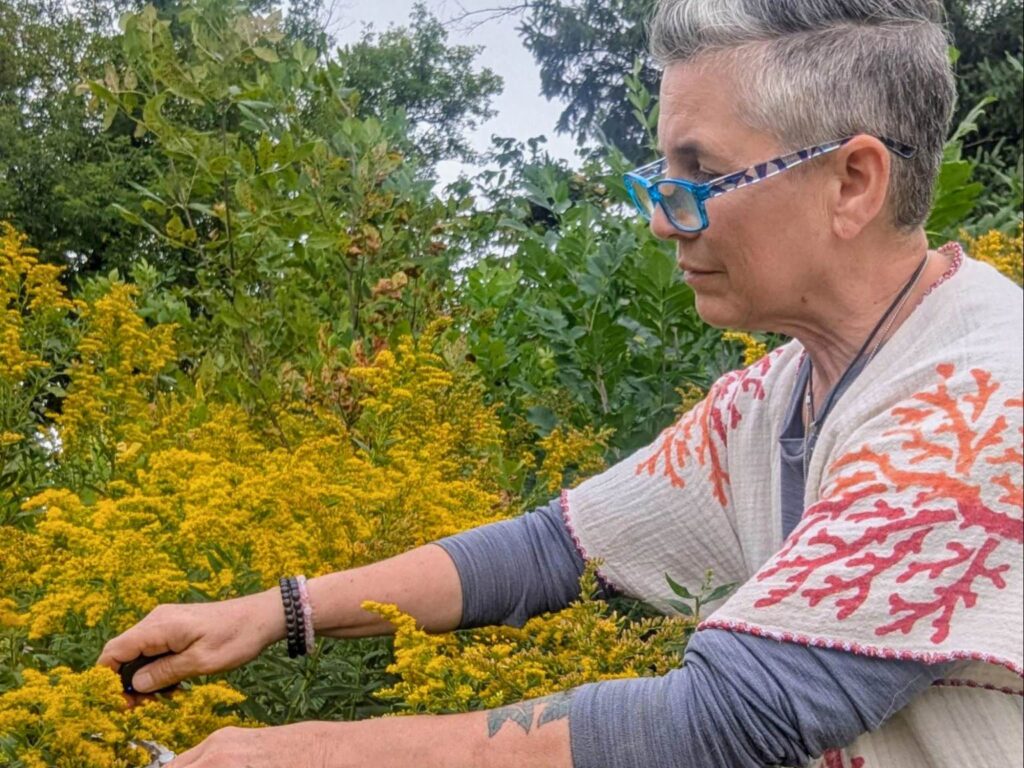
Harvesting with intention means taking only what you need, leaving enough for the plant and the pollinators, and slowing down enough to actually notice what you’re gathering. It turns a chore into a practice.
Harvesting can be more than collecting herbs and vegetables. It can become a practice of gratitude. A practice of paying attention. A practice of recognizing that we are part of the same seasonal rhythms we see in the garden.
Harvest with intention. Take only what you need and, whenever possible, leave enough for the plant, insects, birds, and future growth. Before you cut that flower or gather those leaves, pause. Notice the plant. And be certain of what it is. If you are not completely sure of an identification, leave it where it stands.
Harvest slowly. Notice the scent, texture, color, and stage of the plant. What does the garden smell like right now? What sounds do you hear? What insects are still visiting? What flowers are fading, and which ones are just beginning? Harvesting slowly turns a practical task into a sensory experience.
Preserve summer. Dry herbs. Make infused oils. Prepare tinctures. Create herbal tea blends. Preserving herbs allows us to carry a little bit of summer into the colder months. There is something comforting about opening a jar of dried herbs in January and being reminded of a warm afternoon in the garden.
A Simple Three-Herb Fall Tea Blend
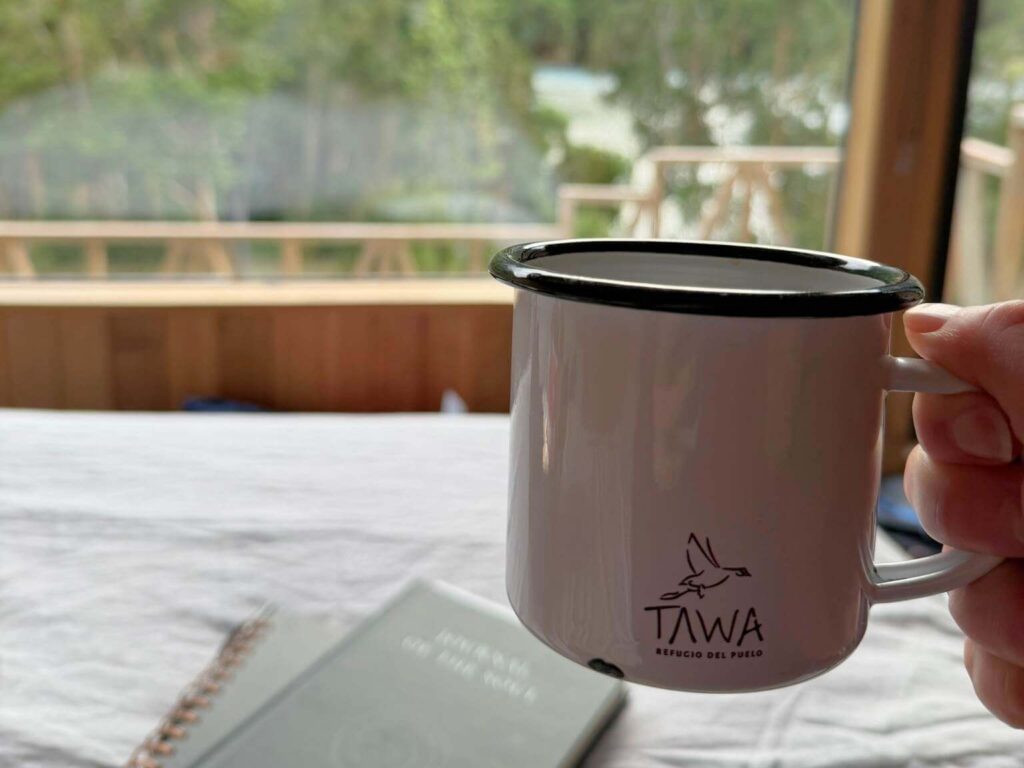
A calming fall tea blend combines equal parts dried lemon balm, chamomile, and California poppy. Use about one tablespoon of the blend per cup, and steep it covered for ten minutes so the volatile oils don’t drift off with the steam. Lemon balm eases tension, chamomile settles both the stomach and the nerves, and California poppy quiets a busy mind before sleep. It’s an evening tea, not a morning one.
(California poppy is gently sedating. Skip it if you’re pregnant, nursing, or taking sedative medication, and use lemon balm and chamomile on their own instead.)
One of my favorite ways to welcome the changing season is with a simple cup of tea.
I’m harvesting the last of the lemon balm and mint and even finding a few California poppy flowers to gather. I have a stash of chamomile that I harvested at the end of June, and it makes a wonderful third for this blend.
As I steep these herbs, I feel my heartbeat slow. I take a few deep breaths. I reflect on the summer that is passing and embrace the slower pace ahead. Shorter days. Longer nights. Cooler weather. A different rhythm.
The tea becomes more than a drink. It becomes a small reminder to slow down and notice where I am in the season.
If You’d Like to Learn This In Person
If reading this makes you want to spend four days actually learning it, which plants, which parts, when to cut them, how to turn them into something you’ll use all winter, that’s what Rewilding the Sacred is.
Four days in the Oregon forest. Hands-on herbalism, yoga, deep rest, and enough quiet to finally hear yourself think.
July 15–18, 2027 · Twenty women · From $997
Yoga for the Transition From Summer to Fall
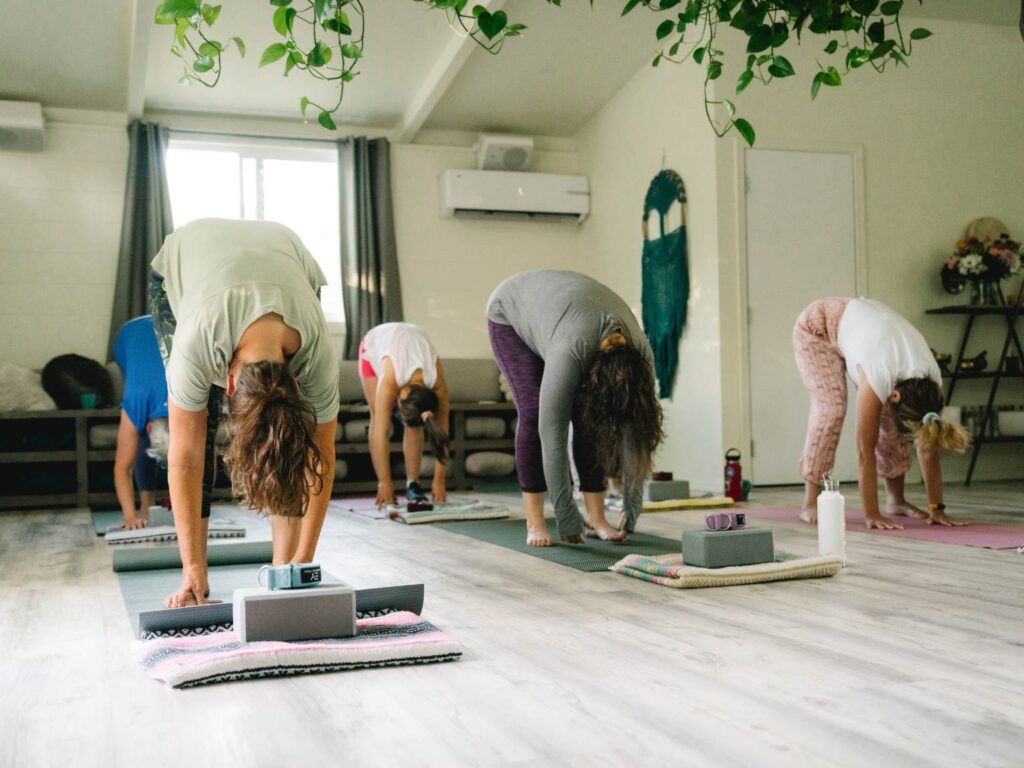
A short grounding practice is enough to mark the seasonal shift: standing forward fold, low lunge, child’s pose, seated forward fold, and legs up the wall. Hold each one for five to ten slow breaths. The whole sequence takes about fifteen minutes.
Yoga can offer another way to move with the changing season. Summer often carries an expansive quality. More activity, more movement, more light, and more time outdoors. As we move into fall, we can explore a more grounded practice. Grounding. Inward movement. Reflection. Rest.
You don’t need an elaborate practice. A few intentional poses can create space to notice the shift.
1. Standing Forward Fold (5–8 breaths) A physical invitation to turn inward and soften. Allow the head to release. Let the back body lengthen. Notice your breath. Keep a generous bend in the knees.
2. Low Lunge (5 breaths each side) A reminder that transition is still movement. One foot moves forward while the other remains grounded behind you. You are moving somewhere new while still connected to where you began. Put a folded blanket under the back knee.
3. Child’s Pose (8–10 breaths) Rest, reflection, surrender. Let yourself be supported by the earth beneath you. There is nothing you need to accomplish here. Widen the knees if that’s more comfortable, and rest your forehead on a block or a stacked fist.
4. Seated Forward Fold (8–10 breaths) A quiet, inward-facing posture that invites reflection. Rather than pushing deeper, consider softening. Let the pose be less about achievement and more about listening. Sit up on a folded blanket and bend the knees as much as you need to.
5. Legs Up the Wall (5–10 minutes) A restorative way to end your practice and embrace stillness. Stay here long enough to actually feel the change. This is the pose people skip, and it’s the one that does the most.
As we move toward fall, yoga reminds us that slowing down is not the same as doing nothing. Rest is part of the rhythm.
Fall Equinox Journal Prompts
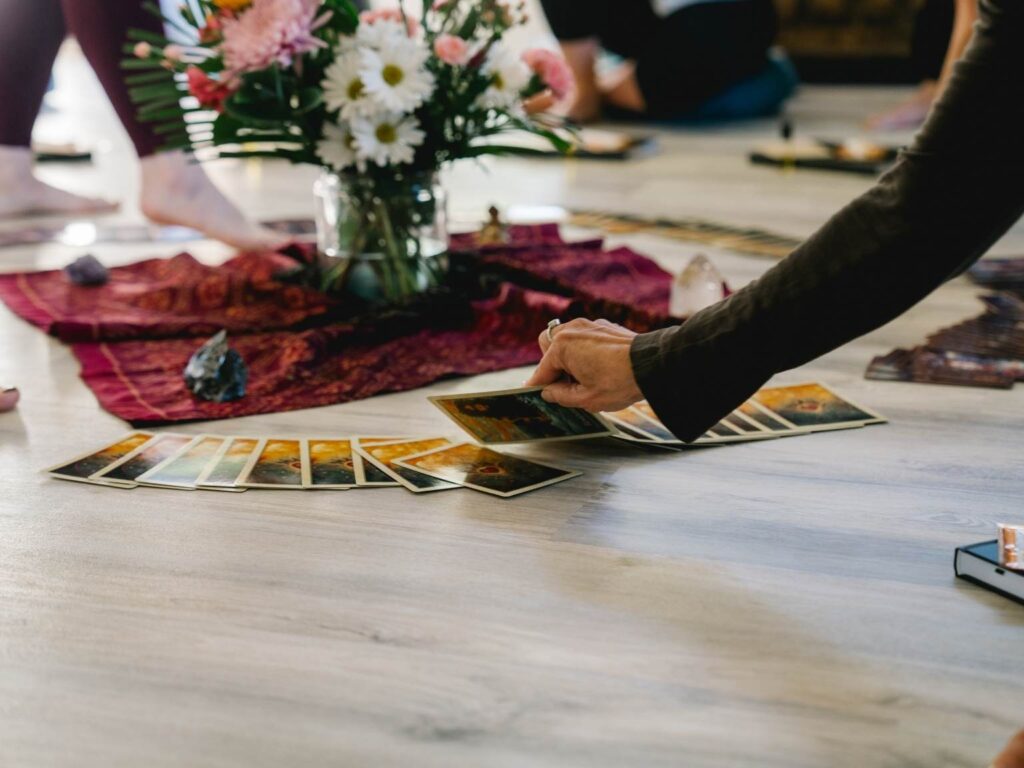
Seasonal change gives us a natural opportunity to reflect on our own lives. Just as the garden asks what is ready to be harvested and what is ready to be released, we can ask ourselves the same questions.
Find a quiet place with your tea, your journal, or simply a few uninterrupted minutes.
- What has this summer taught me?
- What am I ready to harvest from this season of my life?
- What am I ready to let go of?
- What do I want to carry with me into the darker months?
- Where am I being invited to slow down?
- What needs tending before winter arrives?
- What does rest look like for me right now?
- What made me laugh this summer, and how do I get more of that?
You don’t need to answer every question. Choose the one that catches your attention. Sometimes, the question we want to avoid is the one worth sitting with.
Want this on paper? Download the free Fall Equinox Ritual Card: the three-herb tea blend, the five-pose sequence, and all eight journal prompts on one printable page you can stick on the fridge.
[Send me the ritual card →] (Kit form embed)
How to Create Your Own Fall Equinox Ritual
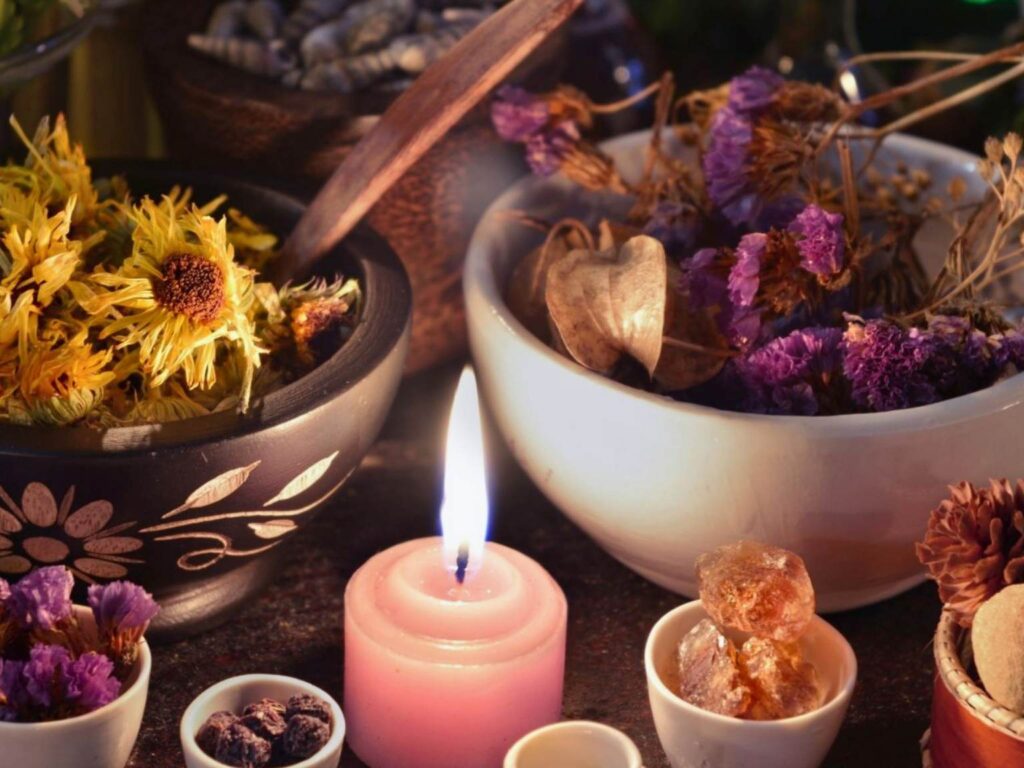
A fall equinox ritual can be as simple as lighting a candle, making a seasonal meal, and writing down one thing you’re ready to release. It doesn’t require a tradition or a script. It only requires that you stop long enough to notice the turn. This year the equinox falls on Monday, September 22, at 5:06 p.m. Pacific.
For generations, people have marked seasonal changes with gathering, food, gratitude, ceremony, and reflection. The autumnal equinox offers a natural pause in the calendar and a chance to acknowledge the changing balance of light and darkness.
We don’t have to follow a particular tradition to honor the season. We can create a simple ritual of our own.
Light a candle. Make a seasonal meal. Harvest herbs from your garden. Share food with friends. Write down what you’re grateful for. Take a quiet walk and notice what has changed since the beginning of summer. Choose one thing you are ready to release.
And not every ritual has to be quiet. Some of the best ones are a table full of people and too much food and somebody’s dog underfoot. Gathering is an old way of marking a harvest, and it still works.
The ritual doesn’t have to be elaborate. It simply needs to help you pause long enough to recognize the season you are in.
Prepare Your Body for the Colder Months
Preparing for the colder months mostly means small, unglamorous adjustments: warmer food and drinks, consistent sleep, continued movement, and time outside while the weather still allows it. The goal is to support your body through the change, not to overhaul your routine overnight.
Our bodies experience the changing season, too. As the days become shorter and temperatures begin to drop, we may naturally want to move a little differently. This can be a good time to gently shift our routines.
- Choose warmer foods and drinks.
- Stay hydrated.
- Prioritize sleep and rest.
- Continue moving your body as the weather changes.
- Spend time outdoors while the weather allows.
- Create calming evening rituals.
- Make herbal teas part of your daily rhythm.
Most importantly, notice changes in your energy rather than judging or fighting them.
The goal isn’t to force ourselves into a completely new routine overnight. It is to listen. The same way we listen to the garden. Preparation is about supporting ourselves as our environment changes. The light changes. The temperature changes. The plants change. And we change, too.
What Will You Gather From This Season?
Goldenrod will eventually fade. The sunflower will bow beneath the weight of its seeds. The asters will bloom, and then they, too, will pass. The vegetable garden will become quieter. The mornings will become colder. The nights will become longer.
This isn’t an ending so much as a shift. The garden isn’t failing because it is no longer blooming. It is moving into its next season.
We can do that, too. We can gather what this season has given us. We can release what we no longer need. We can prepare our homes, our gardens, and our bodies for what is coming. And we can slow down enough to appreciate the transition itself.
We don’t have to put everything in order before we are allowed to rest.
And rest isn’t the end of it. We slow down so we can feel things again. The first genuinely cold morning. The smell of the kitchen when the tomatoes are going. The particular pleasure of a season that asks less of us. Slowing down is how we come back to life, not how we step away from it.
So, as summer gives way to fall, take a moment to ask yourself: What are you harvesting from this season? What are you releasing? What are you carrying forward?
Maybe you don’t need to have the answers yet. Maybe, just like the garden, you are simply moving with the season.
And perhaps that is enough.
Questions About Seasonal Rituals and Herbs
A fall equinox ritual is a simple, intentional practice that marks the turn from summer to fall. It can be lighting a candle, cooking a seasonal meal, harvesting herbs, taking a slow walk, or writing down one thing you’re ready to release. There’s no required tradition or script. The point is to pause long enough to notice the season changing.
The fall equinox falls on Monday, September 22, 2026, at 5:06 p.m. Pacific time (8:06 p.m. Eastern). It’s the moment when day and night are close to equal length, and it marks the astronomical start of autumn in the Northern Hemisphere.
Goldenrod, calendula, lemon balm, holy basil, mint, and the last of the California poppy are all ready in late summer and early fall. Gather flowers and leaves now, while the plant is still putting energy into its upper growth. Once the weather cools, the plant’s energy moves down into the roots, which is when root harvesting begins.
A simple calming fall tea blend uses equal parts dried lemon balm, chamomile, and California poppy, about one tablespoon per cup, steeped covered for ten minutes. Lemon balm eases tension, chamomile settles the stomach and the nerves, and California poppy quiets a busy mind before sleep. Leave out the California poppy if you’re pregnant, nursing, or taking sedative medication.
Grounding, inward-facing poses suit the seasonal shift best: standing forward fold, low lunge, child’s pose, seated forward fold, and legs up the wall. Hold each for five to ten slow breaths and finish with five to ten minutes with your legs up the wall. The full sequence takes about fifteen minutes.
No. A bundle of herbs from the farmers market, a pot of mint on a windowsill, or a walk where you notice which trees are turning first will all work. The practice is the noticing, not the acreage. Dried herbs from a good apothecary make the same tea.
Ask what you’re harvesting from this season of your life, what you’re ready to release, and what you want to carry into the darker months. You don’t need to answer every prompt. Choose the one that catches your attention, and give it ten quiet minutes.
Shift toward warmer foods and drinks, prioritize sleep, keep moving as the weather changes, and get outside while you still comfortably can. Add a warm evening ritual, like a cup of herbal tea, to signal the end of the day. Most of all, notice changes in your energy rather than fighting them.
About the Author
Lisa LeCuyer is a Master Herbalist, NBC-Health & Wellness Coach, and ESM Shamanic Practitioner. She grows and harvests her own medicinal and vegetable gardens and teaches others to work with the plants growing closest to them.
Take the Season With You
The changing seasons remind us that we don’t always need to keep moving. Sometimes we need to pause, breathe, listen, and give ourselves space to reconnect.
That’s what a retreat is for. Four days away from the pace of everyday life, with practice, real rest, and women who understand exactly where you are.
If the herbalism in this post is what pulled you in, Rewilding the Sacred is where we do all of it together. Four days in the Oregon forest. Yoga, hands-on plant medicine, deep rest, and enough quiet to finally hear yourself think.
July 15–18, 2027 · Twenty women · From $997
About the Author
Autumn Adams
E-RYT, YACEP, Founder of Ambuja Yoga
Autumn is a yoga teacher, retreat leader, and the founder of Ambuja Yoga. She is passionate about helping women reconnect with their inner wisdom through yoga, movement, and mindful living.
You Might Also Enjoy
Daily Herbal Ritual for Calm and Clarity
Learn how to create a daily herbal ritual using tea, aromatherapy, and nature practices to…

Box Breathing: A Simple Practice to Calm Your Nervous System in Minutes
Welcome to the Mindful Monday Series. Box breathing is a simple breathing technique — inhale,…
Herbs for Yoga Practice: 5 Simple Ways to Deepen Calm & Connection
Bringing Ritual Back to the Practice If you’ve been wondering how to use herbs in…