
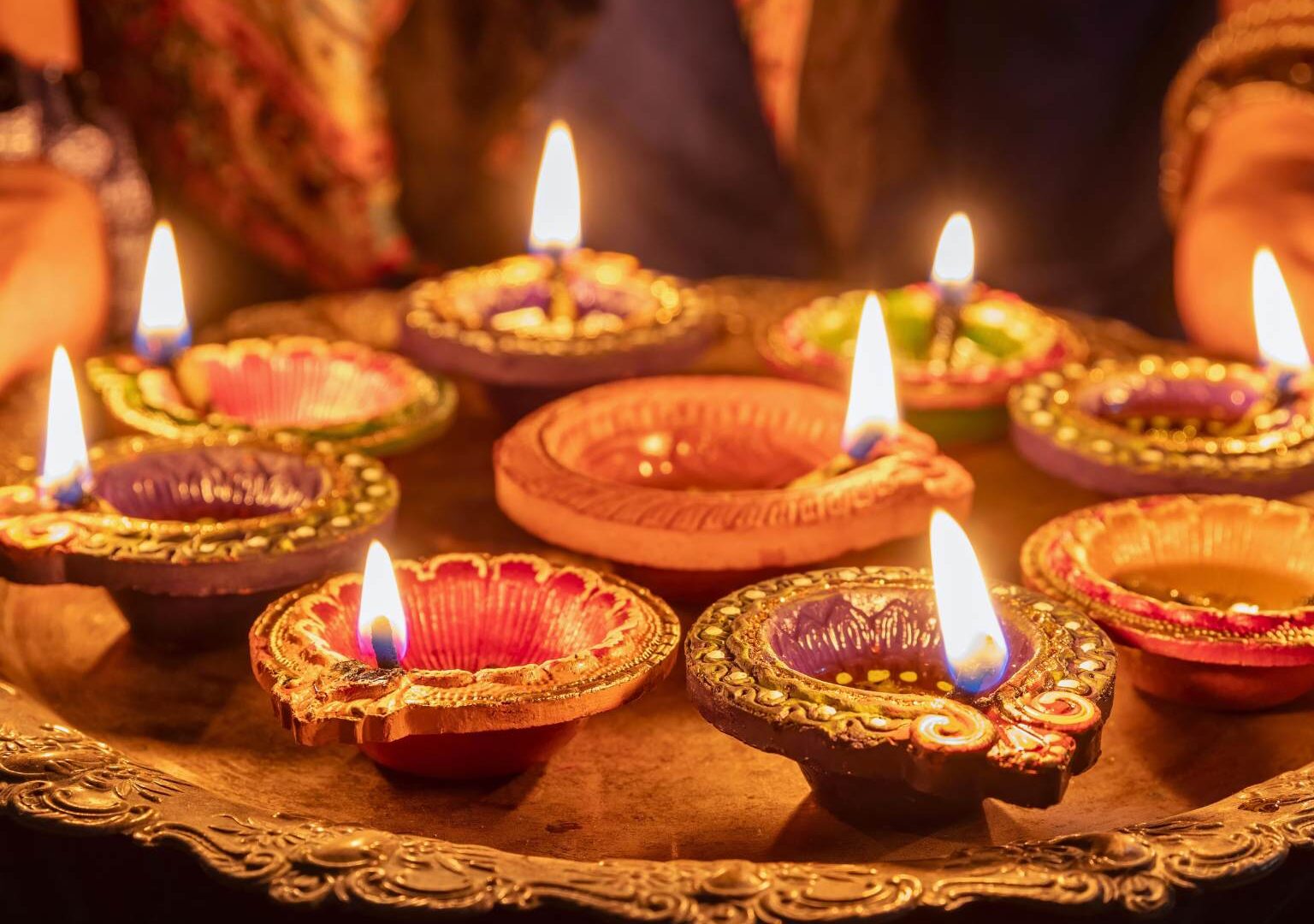
The Spiritual Meaning of Diwali: Light, Lakshmi, and Letting Yourself Receive
13 years · 40+ retreats · 700+ women



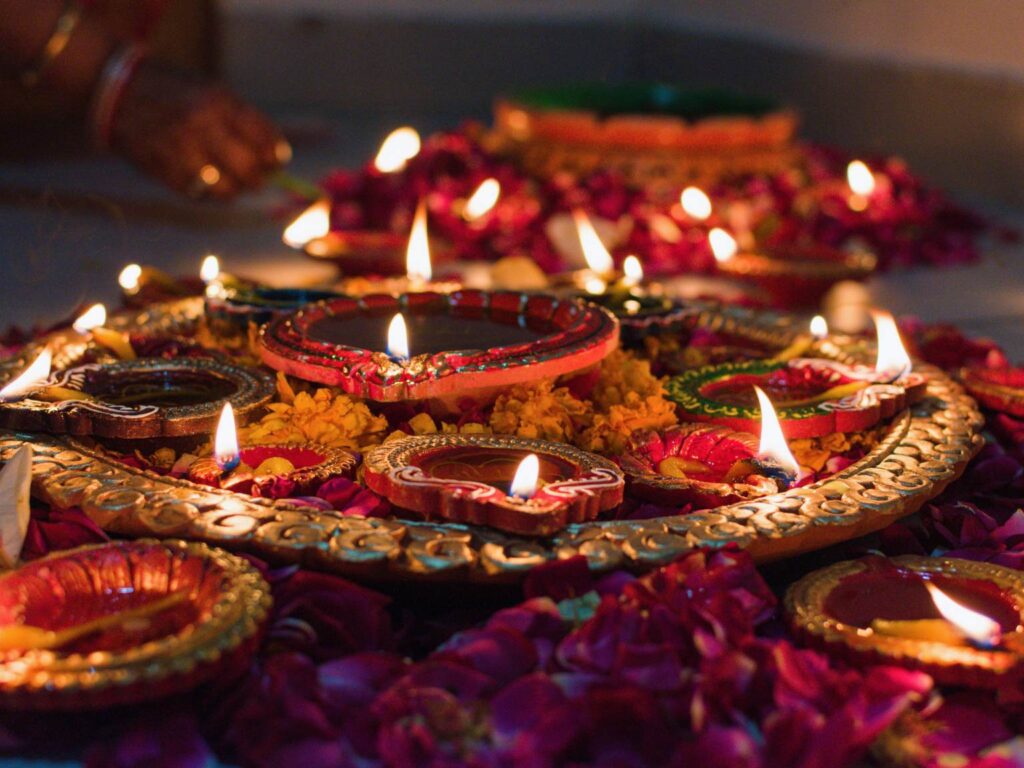
Diwali is the Hindu festival of lights, celebrated over five days each autumn. In 2026, the main day falls on Sunday, November 8. The spiritual meaning of Diwali centers on light overcoming darkness. On the night of Diwali, families clean their homes, light rows of small oil lamps, and welcome Lakshmi, the goddess of abundance and good fortune, inside.
Diwali is a living, sacred holiday for hundreds of millions of people, and Hindus, Sikhs, and Jains each celebrate it with their own stories. What I’m sharing here comes from years of teaching about Lakshmi on the mat. It’s what this festival has taught me about clearing space, setting an intention, and actually letting good things in, especially in the darker seasons of life.
In this post
- What is Diwali?
- What is the spiritual meaning of Diwali?
- Why is Lakshmi welcomed on Diwali?
- What can Diwali teach us about receiving?
- Why is Diwali celebrated on a new moon?
- How do you set an intention for Diwali?
- A simple Diwali practice you can do at home
- How to honor Diwali respectfully
- Diwali FAQ
What is Diwali?
Diwali is a five-day festival of lights celebrated across India and around the world, usually in October or November. The name comes from the Sanskrit deepavali, meaning “row of lamps.”
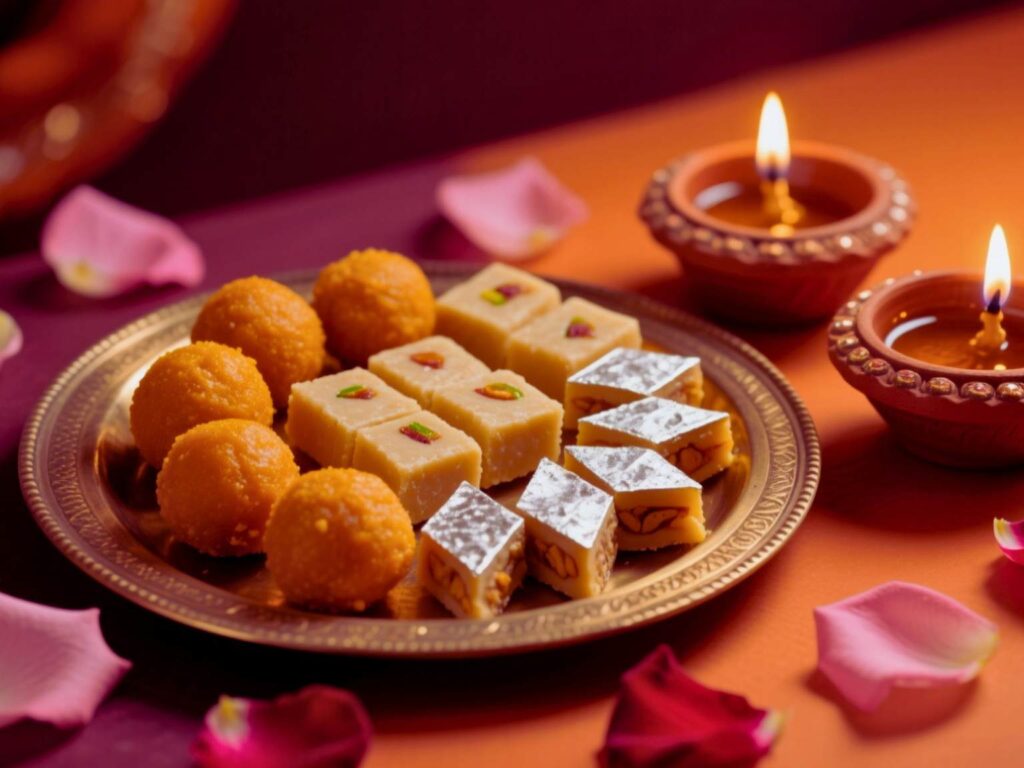
The main day falls on the new moon of the Hindu month of Kartik. Homes are cleaned top to bottom. Small clay oil lamps called diyas line windows, doorways, and rooftops. Families draw rangoli, colorful patterns made from powder or flowers, at the entrance to their homes, and they share sweets, gifts, and meals.
There are many stories behind Diwali, depending on where and how it’s celebrated. One of the best known comes from the Ramayana. When Rama returned home to Ayodhya after fourteen years in exile, the people lit lamps to light his way. Sikhs celebrate Bandi Chhor Divas at the same time, and Jains mark the liberation of Mahavira.
What is the spiritual meaning of Diwali?
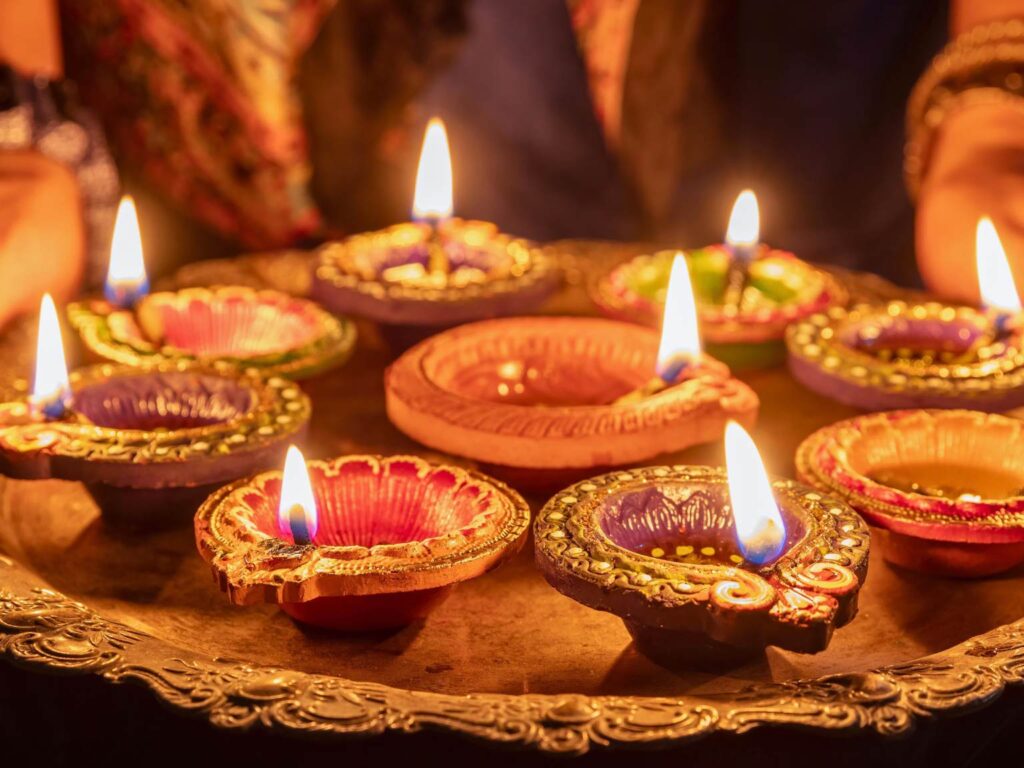
The spiritual meaning of Diwali is the victory of light over darkness, knowledge over ignorance, and good over harm. The lamps are the outward sign. The inner meaning is remembering the light that’s already in you.
This is the part that speaks to me as a yoga teacher. In yoga, light is often used as a word for awareness, the part of you that can see clearly. Most of us don’t lose that light. We just get busy enough, tired enough, and needed enough that we stop noticing it.
Why is Lakshmi welcomed on Diwali?
Lakshmi is worshipped on the main night of Diwali because she’s the goddess of abundance, prosperity, and good fortune, and tradition holds that she visits homes that are clean, bright, and open to her. Families light lamps, leave doors and windows open, and sometimes draw small footprints at the entrance leading inside, so she can find her way in.
For many families and business communities, this is also a time to close out the old year’s accounts and begin fresh. For some communities, especially in Gujarat, the new year begins the day after Diwali.
I’ve written about Lakshmi before. She’s a goddess of abundance, yes, but in yoga she’s also the one we call on to move from a mindset of fear and lack toward one of generosity and gratitude. You can read more about her story, her mantra, and her mudra in The Goddess Lakshmi and the Art of Giving and Receiving.
What can Diwali teach us about receiving?
Diwali is a reminder that receiving takes preparation. Before Lakshmi is welcomed, the house is cleaned, the lamps are lit, and the door is left open.
Most of the women I teach are very good at giving. They give their time, attention, energy, and care, often long past empty. Receiving is harder. Accepting help. Resting before everything is done. Letting a compliment land. Saying yes when someone offers.
I wrote in my Lakshmi post that I will run myself into the ground before asking for help. I know I’m not alone in that.
Opening the door isn’t about deserving more once you’ve finally done enough. You don’t need to earn rest, and you don’t need to earn good things coming your way. The practice is making room, both in your home and in your days, and then letting yourself have what arrives.
Why is Diwali celebrated on a new moon?
Diwali falls on amavasya, the new moon, which is the darkest night of the lunar month. The lamps are lit at the darkest point, not after things brighten up on their own.
I find that useful. Most of us wait until we feel better, have more time, or have things figured out before we do the thing that would actually help.
The new moon is also traditionally a time to pause, rest, and begin again. If this season has felt heavy, that’s a good reason to mark it, not a reason to skip it.
How do you set an intention for Diwali?
To set an intention for Diwali, name one specific thing you’re ready to make room for in the year ahead, and one action you’ll take to make room for it. In yoga, this kind of heartfelt intention is called a sankalpa.
Setting an intention isn’t wishing. It’s giving your brain a clear target. When you get specific about what matters to you, your brain’s reticular activating system (the part that filters what you notice) starts picking up the opportunities, people, and information that match it. Your job is to act on what shows up.
A vague intention like “more abundance” is hard for your brain to work with. Something like “I want to ask for help before I’m exhausted” or “I want two unscheduled hours every weekend” gives it something real to notice, and gives you something real to do.
A simple Diwali practice you can do at home
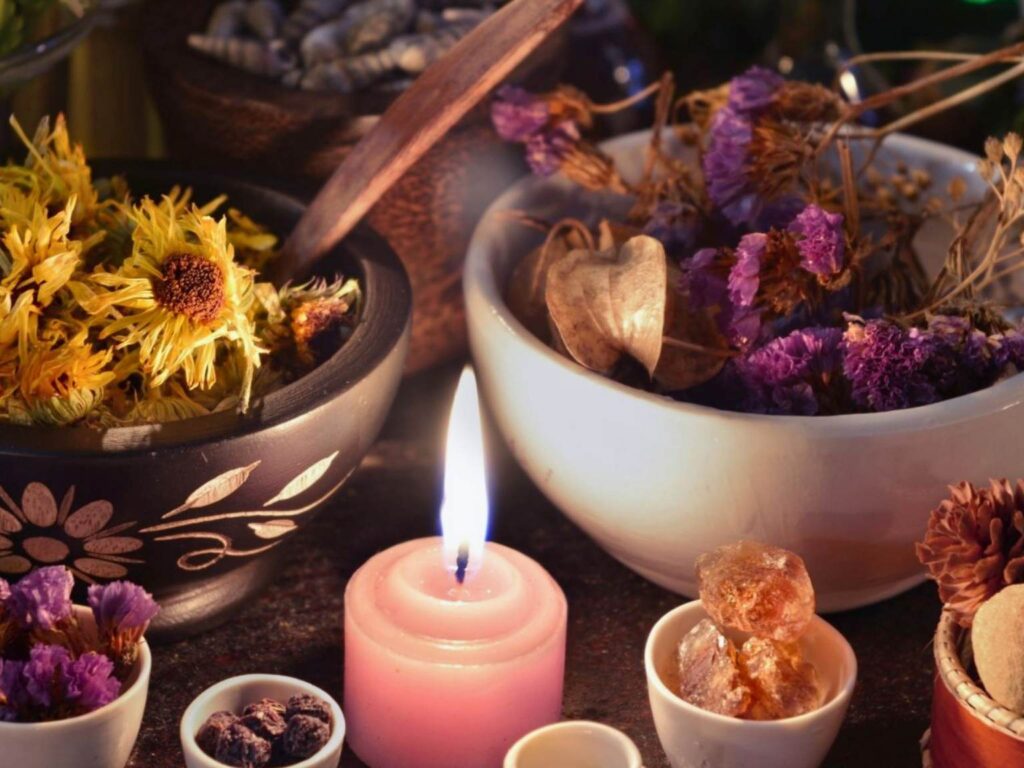
This takes about twenty minutes. You don’t need any special supplies, just a candle or lamp, a journal, and a quiet corner.
- Clear one small space. Not the whole house. Just a windowsill, a nightstand, or a corner of your desk. Take everything off, wipe it down, and only put back what you actually want there. Notice how it feels to make room on purpose.
- Light a lamp. A diya, a candle, or even a single tea light. Set it in the space you just cleared. Never leave a flame unattended.
- Take Padma Mudra. Bring your palms together in front of your heart. Keep your thumbs, pinkies, and wrists touching, and spread the other fingers apart like a lotus opening. Breathe here for ten slow breaths.
- Chant the Lakshmi mantra. Om Shrim Maha Lakshmyai Namaha (ohm shreem muh-hah luhk-shmyai nuh-muh-huh). It means “Om, I offer salutations to the great goddess of good fortune.” Chant it out loud or silently, a few rounds or 108 times if you have a mala.
- Journal three questions.
- What am I ready to clear out, let go of, or stop carrying?
- What am I ready to receive this year? Be specific.
- What’s one action I’ll take this week to make room for it?
- Open the door. If it’s safe and comfortable, open a door or window for a minute before you blow out the lamp. It’s a small, physical way to say yes.
How to honor Diwali respectfully
You can honor Diwali respectfully by learning about it from the people who celebrate it, accepting invitations when they come, and treating it as a sacred holiday rather than a theme. Many Hindu temples and community centers host public Diwali events that welcome visitors. Wishing a friend or neighbor “Happy Diwali” goes a long way, too.
The at-home practice above isn’t a Diwali puja. It’s a yoga practice inspired by the season, and that’s how I’d share it with others.
Diwali FAQ
In 2026, the main day of Diwali is Sunday, November 8. Diwali is a five-day festival, and its date changes each year because it follows the Hindu lunar calendar. It always falls on the new moon of the month of Kartik, usually in October or November.
Diwali comes from the Sanskrit word deepavali, which means “row of lamps.” It’s often called the festival of lights because homes, temples, and streets are lit with small oil lamps, candles, and lights.
The spiritual meaning of Diwali is the victory of light over darkness and knowledge over ignorance. Many people also see it as a time to clear out the old, set intentions, and welcome abundance into the year ahead.
Diwali is celebrated by Hindus, Sikhs, and Jains, each with their own stories and traditions, in India and by communities around the world.
Lakshmi, the goddess of abundance and good fortune, is worshipped on the main night of Diwali because tradition holds that she visits homes that are clean, lit, and open to her. Families perform Lakshmi Puja that evening and leave lamps burning to welcome her.
A widely chanted Lakshmi mantra is Om Shrim Maha Lakshmyai Namaha. It means “Om, I offer salutations to the great goddess of good fortune.”
Yes, many non-Hindus join Diwali celebrations, especially when invited by friends, neighbors, or local temples. The respectful approach is to learn the meaning behind the holiday, follow the lead of those who celebrate it, and treat it as sacred rather than decorative.
“Happy Diwali” is always welcome. You may also hear “Shubh Deepavali,” which means “auspicious Diwali.”
Make room for yourself
Most of us rarely give ourselves this kind of space anymore. A cleared windowsill, a lit candle, and twenty quiet minutes is a good place to start.
And if you’re craving more space than an evening can hold, that’s exactly what our retreats are for. See upcoming retreats →
Happy Diwali.
Love,
Autumn
About the Author
Autumn Adams
E-RYT, YACEP, Founder of Ambuja Yoga
Autumn Adams (E-RYT 500, YACEP) is the founder of Ambuja Yoga, where she's led women's yoga retreats since 2014 — 40+ retreats and 700+ women across Oregon, North Carolina, Sedona, Patagonia, Greece, Mallorca, and Thailand. Her work has been featured in Insider, Shape, Zappos, Asia Spa, Direct Holiday, and Bend Nest, and she's the author of The Little Book of Mudra Meditations.
You Might Also Enjoy

The Yoga Philosophy Books That Changed How I Practice
The best yoga philosophy books don’t read like textbooks. They read like stories, and the…
Learning to Trust Yourself on the Yoga Mat
I’ve been teaching yoga for over a decade now. If you’d walked into my class…
Why I Moved My Yoga Mat to the Back of the Room (And What I Found There)
I’ve been practicing yoga for over two decades… nearly three! And, to be fully transparent,…